Collaboration: An EU MDR success story
By Jon Hancuff, manager, global Editorial Content for Corporate Marketing and Communications
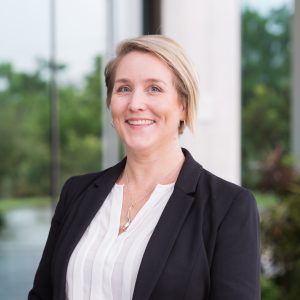
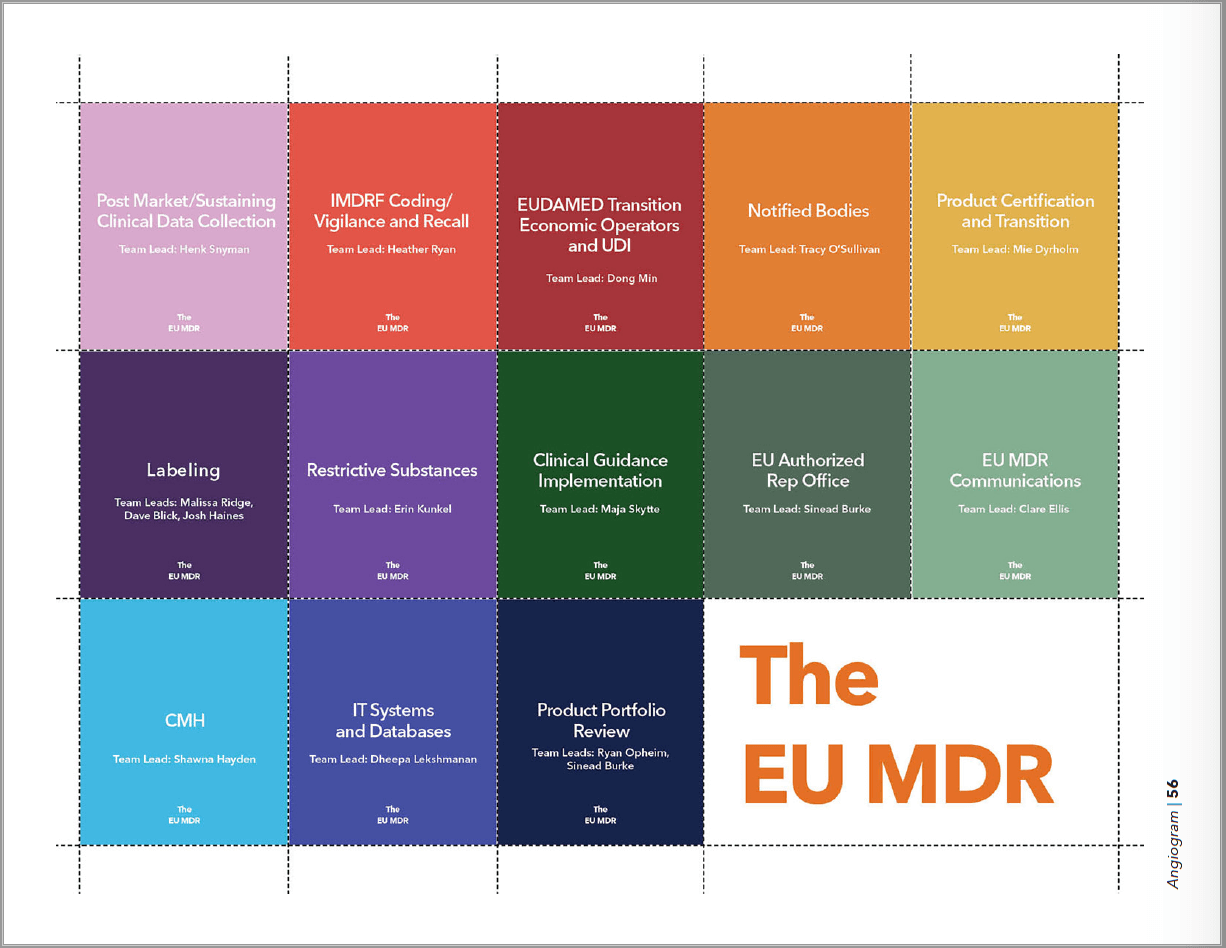
She was ecstatic for her team, which had been working on the submission since early in 2019. But Joanne also knew that much credit had to go to the global structure that was implemented during a European Union Medical Device Regulation (EU MDR) kickoff meeting held at the beginning of 2019 in Bloomington. That structure had been set up by Sinead Burke, the director of Regulatory Affairs for Cook Medical European Union (Cook Medical EU). It provides Cook employees around the world who are working on EU MDR (a collection of several dozen people) with a global, cross-functional network of support and expertise to draw upon to ensure that all of our products continue to be available to patients in Europe. The structure also ensures a consistent approach for Cook’s EU MDR submissions.
The Australian effort, which was focused on that site’s custom-made aortic devices, was proof that Cook had not only the right structure, but also the right processes, and, most importantly, the right people to do the work EU MDR is going to require.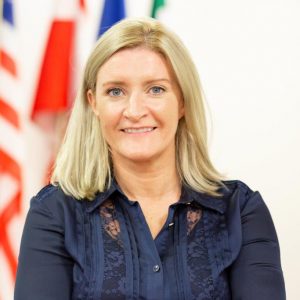
“It was a real team effort,” Joanne said. “It was an excellent example of people working together from all over to make it happen.”
What is EU MDR?
In 2017, after a series of scandals involving negligent device manufacturers, the EU Parliament escalated the overhaul of the European Medical Device Directive (MDD) which was already under review, and replaced it with the EU MDR. By moving from a “directive” to a “regulation,” individual countries would no longer be able to interpret and implement the legislation in whatever they saw fit. A regulation has to be implemented by all countries exactly as it is written.
Initially, device manufacturers had until May 2020 to have compliant processes in place for registering their products, but because of the COVID-19 pandemic, that deadline was pushed back a year to May 2021. Any products that are not registered under the new guidelines by May 2024 will have to be taken off the market until they meet EU MDR requirements.
The new requirements include changes and additions in the following areas:
• Implant cards and labeling
• Single-use devices
• Clinical requirements
• Notified bodies
• European Database for Medical Devices (EUDAMED)
• Unique device identification (UDI)
• Restrictive substances
• Person responsible for regulatory compliance
• Post-market surveillance and vigilance
• Economic operators
Additionally, non-EU based manufacturers must designate an “authorized representative” in the EU who will be the contact for regulatory bodies who have questions about the company’s products that are sold in the region, but not manufactured there. The regulatory affairs team in CMEU serves in that role for Cook.
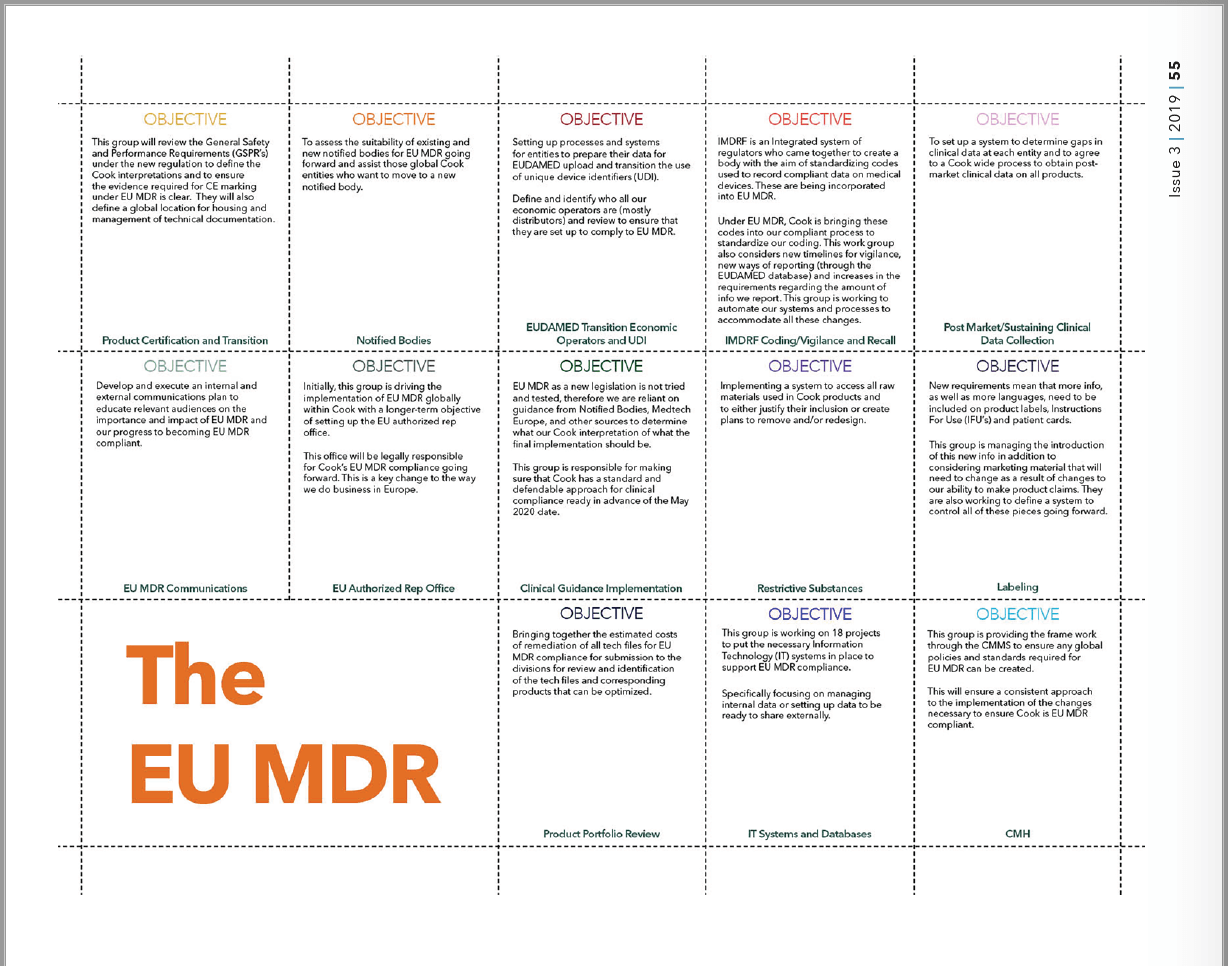
For more information about EU MDR, and some of the key objectives, check out the images below from Issue 3 2019 of the Angiogram below.
Please note that you can click the images below to enlarge them and view them more clearly.
Committing to collaborating

After the Bloomington meeting at the beginning of 2019, Australian working groups were set up to align with the teams in the global program structure. In addition, a project manager was assigned to each site to help keep its initiatives on track and in alignment with the global efforts. This was a departure from how previous projects Joanne had worked on at Cook were led.
“Having dedicated project management has been critical—it’s a huge help,” she explained.
With the working groups in place, they immediately set about comparing Cook Australia’s quality system to the quality system requirements laid out in the EU MDR to identify any areas where Australia’s system needed to be updated. This is a process called “gap assessment.”
Their custom-made devices, though, provided a unique challenge precisely because of their uniqueness—each one is specially designed by a physician for a specific patient. This means that there is no one set way to build the product. As such, it had existed outside of the company’s quality system, so the working group assigned to those devices had to build a quality system from the ground up in less than a year.
“There were well over 200 documents created,” Joanne said. “The team had to think really carefully about how the Custom Made Device (CMD) process would align with our existing quality system and figure out how to bring CMDs into that system.”
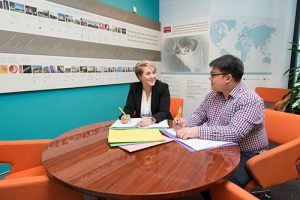
Additionally— the project encouraged close collaboration between
the Cook Australia team and the William Cook Europe (WCE) team in Denmark. Cook Australia and WCE are the only two Cook facilities that produce custom-made devices.
“They were bouncing the ideas off of each other in terms of what they were going to do and how they were going to navigate the change,” Sinead said. “It’s such a great success for Cook to be working in this collaborative way. To have that collaborative thinktank, for want of a better word, in terms of what is the most efficient and sensible way to achieve the compliance that we need and also, ultimately, to get the certification on time.”
“It’s basically making sure that we are aligned in our approach and also helping each other wherever we can because there’s absolutely no use in someone repeating the work if it’s already been done,” Joanne added. “Now we have a much better understanding of how the other works in the space of custom-made devices. We’ve built good relationships with WCE going forward.”
First across the finish line
The custom-made device area and its quality system went through an onsite audit for EU MDR compliance by TÜV SÜD in January of this year. Joanne admitted that it wasn’t until about a month before the audit, when she began to see the planned documentation start showing up in the product lifecycle management (PLM) system, that she started to feel like they were going to hit their deadline.
The audit went smoothly, especially considering everyone—Cook employees and the auditors—were all going through an EU MDR audit for the first time. It helped that both auditors were familiar with Cook products, processes, and documentation. As has been the case throughout this process, the experience ended up being more of a collaboration.
“I didn’t feel like they were there just to actively try to find where we did something wrong,” Joanne said. “I felt like they were also learning, they were open to discussion. There were a couple of points where maybe we disagreed on the interpretation of the regulations but in the end, I felt like we came to an agreement together on what the correct interpretation was. It was a good audit.”
The audit was completed by the end of January, led by Cook Australia’s Quality Assurance department. The facility was then notified of their nonconformances, which they successfully responded to within a month.
Then the waiting game for certification began. Joanne compared it to being in a university, when you feel you had done well on an exam, but you don’t know for sure until you receive the official results.
“You can’t actually relax until it happens,” she said.
Word finally came late on a Friday afternoon.
Joanne immediately sent out an email to all the MDR team leads, Sinead, and the Cook Australia leadership group to let them know.
“It was just nice to finish off a Friday afternoon on that really good piece of news,” she said. “So, some people saw it on Friday and had a good weekend because of it and some people had an excellent start to their Monday when they checked their emails. Getting the final certificate, it lifted kind of an unconscious weight—it’s almost like anxiety until it’s over. It’s a huge relief to have it in our hands now.”
“This is a huge achievement,” Sinead added. “The team at Cook Australia, as well as all the people globally who supported the site, put so much work and dedication into getting this over the line. It is really a cause for celebration.”
In the end, though, for Joanne and Sinead the most important outcome of this process is that patients in Europe are now able to receive the custom-made devices from Australia.
“Those patients have got no other option,” Joanne said. “You literally can only order one of them if a doctor can show that there are no other options for that patient with an already registered device. It’s kind of the last resort for those patients.”
“Had we not secured certification, those patients with those unique requirements, we wouldn’t have been able to fulfill their needs,” Sinead added. “So that was very front of mind for everybody as we were going through this—that we really had to get over the line for them.”
Lessons learned and what’s next?
Resting on their laurels has not been an option for the folks involved in getting Cook’s products certified in the EU. But the process should become more efficient with each submission. Both Sinead and Joanne feel the teams learned some important lessons while working on the custom-made devices. And they will have plenty of chances to incorporate and refine those lessons—Cook is in the process of submitting just under 260 groups of products to the MDR, and will receive approximately 70 certificates globally.
“There were definitely some things that didn’t go as smooth as we would have liked,” Sinead said. “I think the biggest thing that we probably learned about was that you really can’t talk enough when it comes to troubleshooting issues. If you have an issue at a particular site you are always going to find someone else at another site who has it. So, we need to make sure that people are raising their concerns as quickly as possible and are not afraid to do that.”
One thing that won’t change going forward is the undercurrent of commitment to Cook’s values that permeated this project.
“It was such a good example of how we were living our values in doing this work,” Joanne said. “Obviously a key one is ‘solving problems together.’ There’s no way any one group could have done this alone.”
“Being able to work together with those global teams and getting expertise from the whole of Cook—the broad knowledge base to pull on was fantastic,” Joanne said. “It was a huge amount of work, but we were able to do it because everyone pulled together.”
—
Want to check out more Life@Cook blog posts?
Click the images below to check out other Life@Cook blog posts.
A big congratulations to Joanne, Sinead and the team!!! 🙂
Congratulations to all involved! A great example of collaboration, focus and project management
This is awesome news! Congrats to all involved in this crucial project!
Hi, thats a great Milestone achieved. Congrats to all Teams working to get our products EU-MDR Ready !
thanks a lot
Kind regards
Claudia
awesome! What a cheerful story!
I love this story. I had the privilege to work briefly with the EU MDR collaboration and am super impressed with the team Cook Medical has put together. Sinead and Joanne are A++++. Great work everyone!