WireGuide | Issue 2 | 2022
The WireGuide is a digital newsletter that was created in 2017 by a group of marketing interns. With intentions of connecting the other interns with each other, they created content surrounding the other interns’ lives. The WireGuide stopped in the summer of 2020, as there wasn’t an intern program due to the pandemic. Two years later, we are relaunching it on a new platform. Now featured on the Life@Cook blog, the WireGuide and its stories are available to an even bigger audience. With that being said, welcome to the WireGuide!
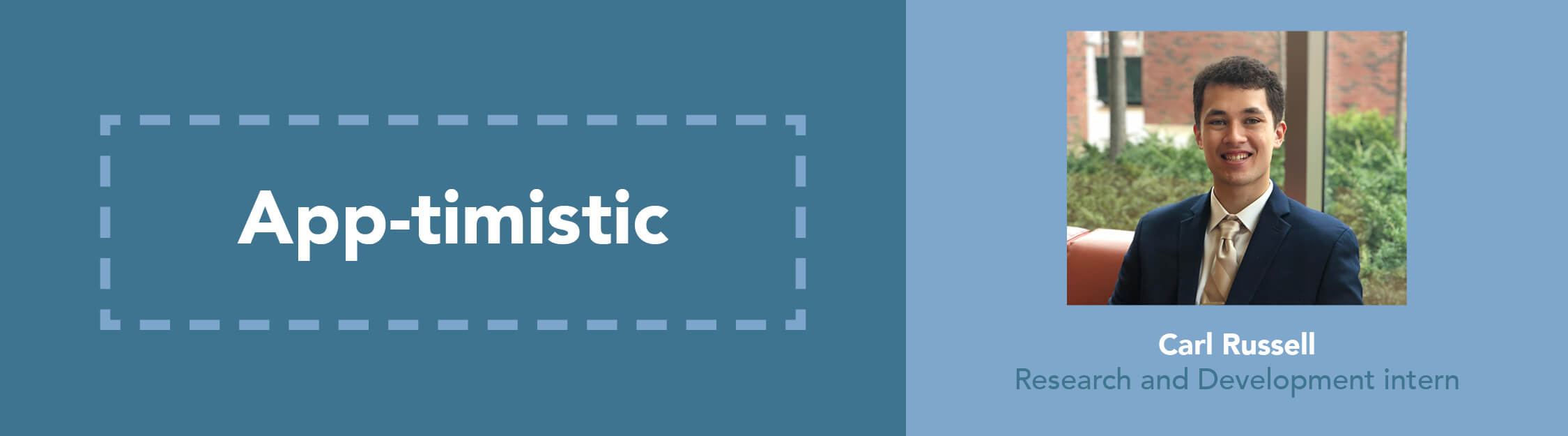
The common saying is, “When life gives you lemons, make lemonade.” For Carl Russell, he makes an app.
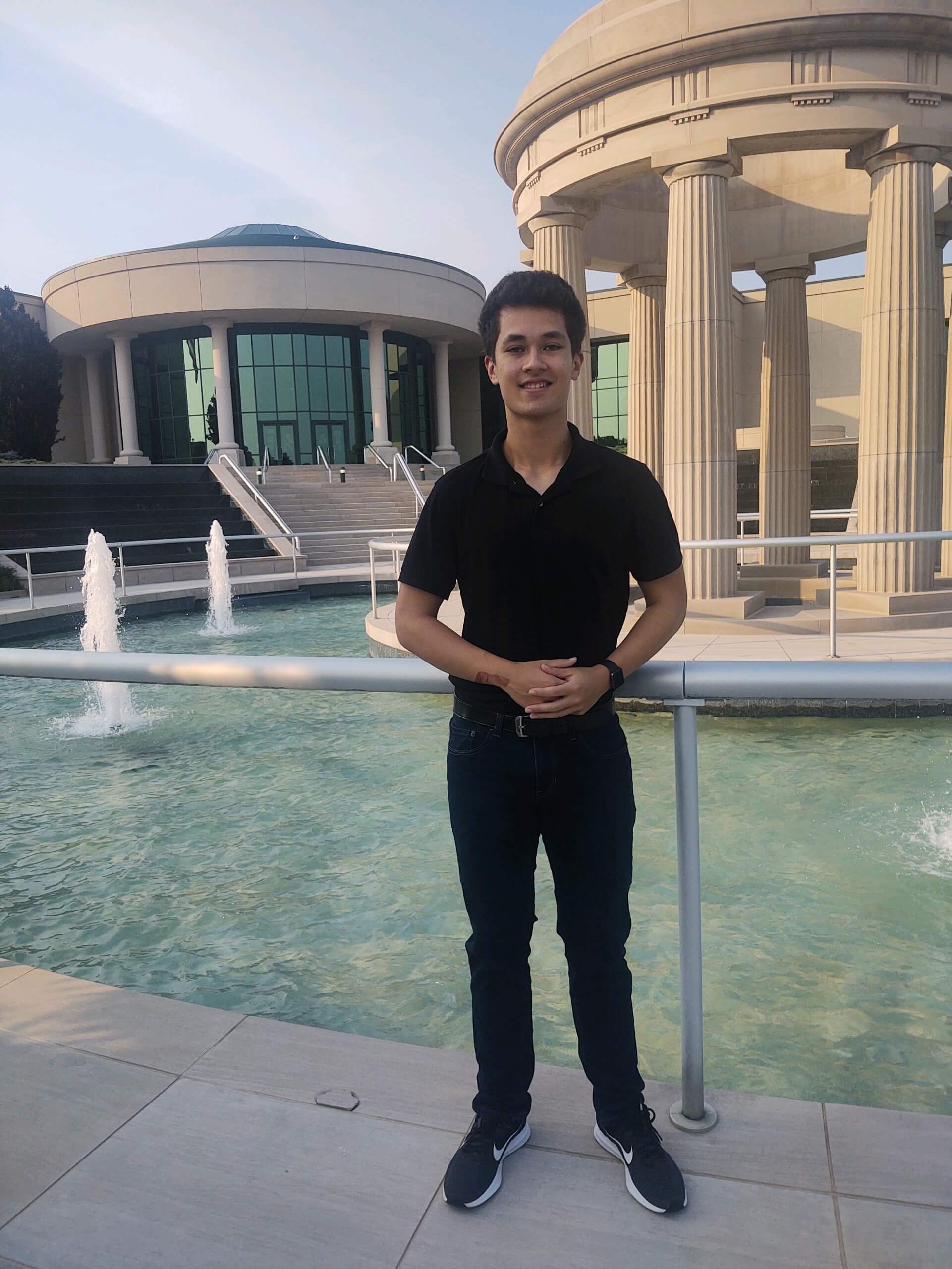
Carl, who is originally from San Ramon, California, is an engineering intern in the Research & Development (R&D) Vascular department and is on his third rotation. Throughout his life, Carl has seen the effects chronic kidney disease (CKD) can have on someone. It’s even more impactful when that someone is your mother. After hearing how complicated it was to find an app designed to meet his mother’s needs, Carl leaped into action.
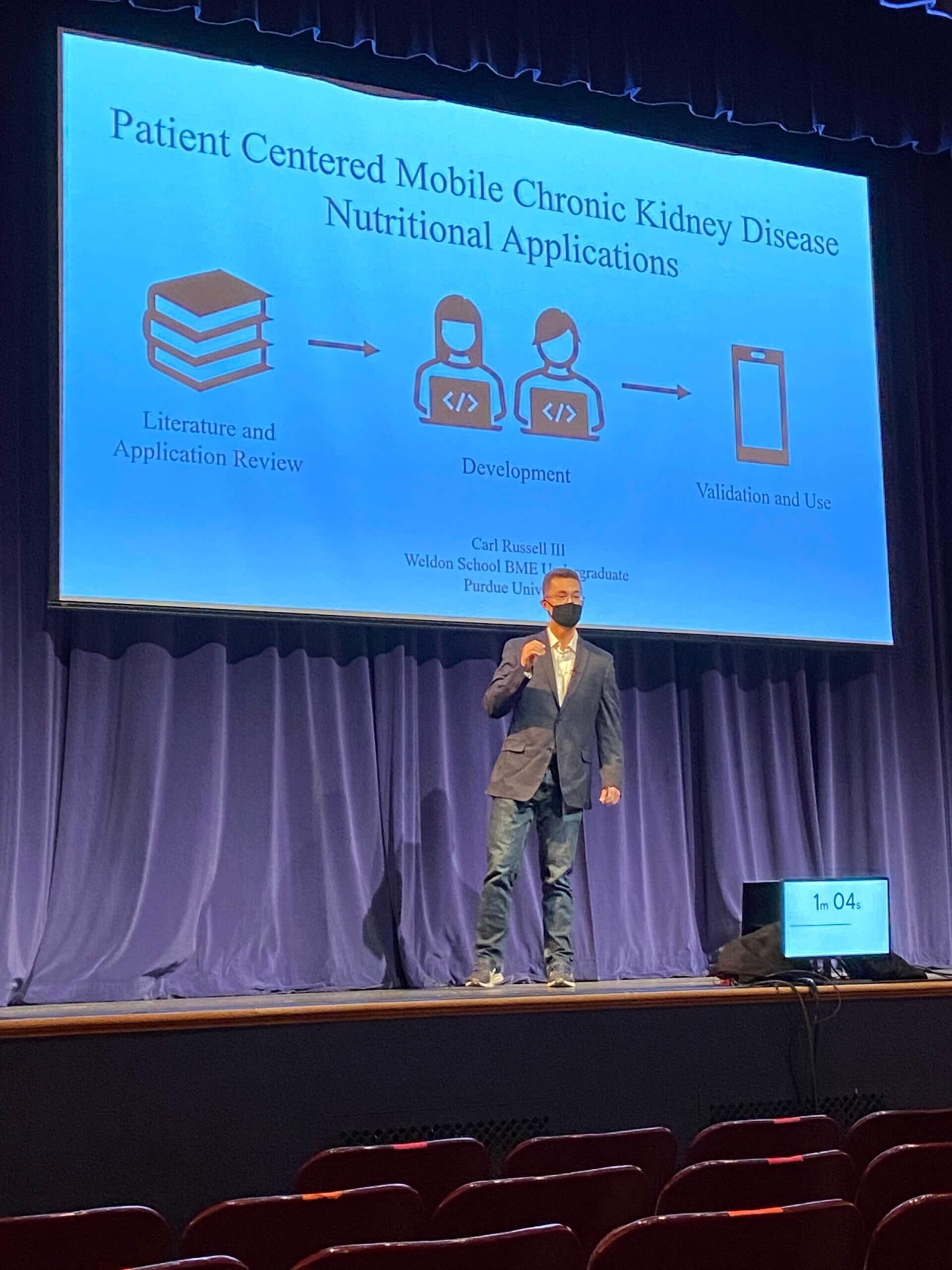
The process of a published paper
When I asked Carl, who is entering his senior year at Purdue University where he is a biomedical engineering major, to tell me about himself, there was one trait that remained constant throughout his story—optimism. This accomplished intern has remained optimistic while facing challenges from the pandemic, such as unemployment and online classes, as well as the complications his mother faces from CKD. CKD refers to a slow and progressive loss of kidney function over time.1 In other words, the patient’s kidneys cannot filter blood properly. When Carl was describing this to me, I could see and hear hope in his eyes and voice, rather than defeat. To remedy these obstacles, he created an app that would provide him the experience and opportunities he was missing because of the coronavirus pandemic, and one that would cater to a real-life CKD patient’s needs. Whether it be his immediate family or a stranger, the development of this app will better the lives of CKD patients everywhere.
The inspiration for this project began at home. Carl often heard his mother discussing how difficult it was to use the mobile applications that were recommended to help her during her battle with CKD. There weren’t any existing apps that were specific to kidney disease patients. At the same time, he and his classmates were facing layoffs, had limited access to campus facilities, and weren’t getting a lot of opportunities to put the skills they gained through their studies to work. So, they teamed up to develop an app that would better assist CKD patients.
Carl’s first step was finding guidance. He called 20 nephrologists, which are doctors that specialize in conditions that affect the kidney.2 When he finally connected with an associate professor at Indiana University (IU), it was proposed that Carl do a systematic review to see what research has been done and what was currently on the market. To do this, Carl recruited three of his biomedical engineering classmates. A professor of nutrition at University of Minnesota Twin Cities also joined their team as a nutrition subject matter expert (SME) and consultant. They started the systematic review process in May of 2020 and spent the following months collecting data and revising manuscripts.
During the systematic review, Carl and his colleagues looked for and evaluated different characteristics of current mobile applications. They found that the features they wanted to see in an app that catered to CKD patients were not available. These features include nutrition tracking, nutritional information for micronutrients that effect kidney health, accessibility for elderly patients, personalized dietary and exercise tips, and a generated report of each patient’s activity that clinicians have access to and can provide feedback on regarding their nutrient intake, diet, or exercise trends.
Nearly a year later, their systematic review was published in the Journal of Renal Nutrition.
Bringing it to life
But that wasn’t enough for Carl.
“I couldn’t let this paper sit and do nothing,” Carl said, “I wanted to see what I could do with it.”
In addition to being the director of the project for his app, he is president of the Caduceus Club, the engineering liaison for the Undergraduate Research Society, the secretary of the Biomedical Engineering Honors Society, and a member of the the app’s Nutrition Advisory Board. In addition to these, Carl is also heavily involved in project management for Engineering Projects in Community Service (EPICS) at Purdue. EPICS consists of around 50 different teams that focus on projects ranging from biomedical engineering to Deaf Kids Code, a team that helps deaf students learn how to do computer coding. With that being said, it was highly likely that Carl would find a team that would be willing to help with his app development, and he did. Students from the Information Management Systems team joined Carl in this project.
However, developing the app was still not enough.
“I wanted an organization to really see this. I wanted an organization to back this up,” he said.
He wanted to partner with the biggest kidney affiliated organization that he was familiar with—The National Kidney Foundation. Fortunately, one of his professors had a contact there and Carl was able to reach out to her. The National Kidney Foundation was quick to partner with Carl and his colleagues, as they were receiving an app that was developed for free in return for their partnership.
The new partners established a Nutritional Advisory Board, which consists of clinicians and patients who provide feedback during quarterly meetings and supervise app development. This is being worked on by both engineering and computer science students involved in EPICS, and will be going into alpha testing this summer.
Carl hopes that once the app is launched, they can conduct a study with clinicians who treat CKD patients, such as nutritionists and nephrologists, that tracks how their patients’ health is impacted. Once they can measure the app’s usage and see how effective it is, they hope the National Kidney Foundation will adopt it.
More about EPICS
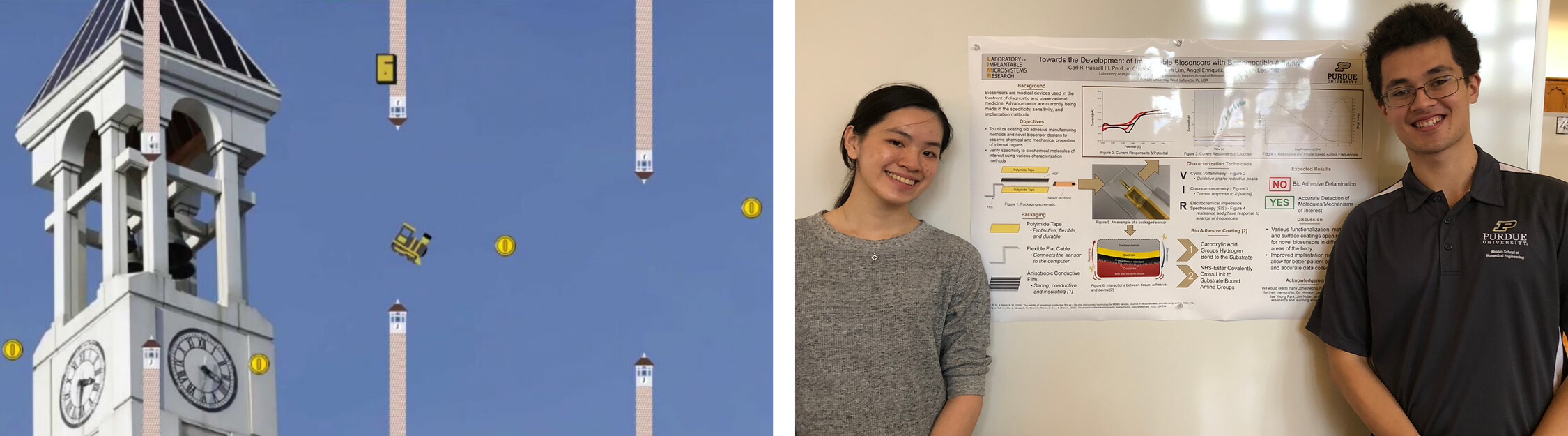
Through EPICS, Carl has worked on many biomedical engineering projects. His team developed a Flappy Boiler game for the Imagination Station Children’s Museum in Lafayette, Indiana, that is similar to the once iconic Flappy Bird game that dominated children’s smart device screens in 2013. However, there are a couple of differences. They understandably switched the icon in this game from a bird to a train to represent their school mascot. Also, rather than tapping on the screen to move the icon, this game uses electromyography (EMG) signals from the user’s arm. EMG measures the electrical currents generated in the muscle while contracting.3 Therefore, when the user squeezes or twists their arm, the EMG signals move the train in the game.
The Biomedical Engineering team also worked on additional projects, such as developing a hospital cable management system for the IU Cancer Center in Indianapolis that features retractable cables that are interchangeable with other cords. They are also in a partnership with the Centers for Disease Control and Prevention (CDC) to develop a child-resistant pill reminder container, and they have developed a prototype for a low-cost automated CPR machine to be used in Quito, Ecuador.
Sources
- Mayo Clinic Staff. Chronic kidney disease. Mayo Clinic Web Site. https://www.mayoclinic.org/diseases-conditions/chronic-kidney-disease/symptoms-causes/syc-20354521. Published September 03, 2021. Accessed July 14, 2022.
- WebMD Editorial Contributors. What is a nephrologist?. WebMD Web Site. https://www.webmd.com/a-to-z-guides/what-is-nephrologist. Published June 23, 2021. Accessed July 14, 2022.
- M.B.I. Raez, M.S. Hussain, F. Mohd Yasin. Techniques of EMG signal analysis: detection, processing, classification and applications. National Library of Medicine Web Site. https://www.ncbi.nlm.nih.gov/pmc/articles/PMC1455479/#:~:text=The%20EMG%20signal%20is%20a,activity%20(contraction%2Frelaxation). Published March 23, 2006. Accessed July 14, 2022.

Carl is so cool