Writing on the walls, and painting on them, too
Christian Bach is a digital designer and a street artist
I should start by telling you that I love traveling. Traveling is what makes me the person I am, deep down, at my core. When I get a chance to do it, I always try to keep a record of “those things on the walls” in the destinations I choose to visit. Depending on who is talking about them, those “things” are called graffiti, street art, public art, doodles, vandalism, rebellion, revolution, freedom of expression, stencils, etc. The list could go on and on.
These bursts of color and warmth on the walls, on trains, and on abandoned buildings are virtually everywhere in the world: in Siberia, in Sarajevo, in Sydney, in Armenia. Their universal human value has always pushed me to document them and look for them in my travels.
I tend to compare these scribbles to cracks: through them, ugliness or beauty, poetry or horrors, emerge. They trigger laughter and provoke thoughts. They force the viewers to focus on the fact that the world around us is a huge canvas. Public art is on the rise. New things are appearing on the walls of all sizes of cities. I could be wrong about it, but for me, each one brings life to what was a blank page.
It all begs the question, though—what is the difference among the terms listed above? For example, what is graffiti and what is street art?
“Depending on who you ask, graffiti is either a form of vandalism, or a form of art—or both, simultaneously. By definition, graffiti refers to markings, photos, words, initials, or drawings that have been spray-painted, sketched, or even scratched onto walls, sidewalks, or any other publicly accessible areas… In contrast, street art is, quite literally, art that can be found on the street. Defined as ‘public-space artwork that’s created for consumption outside of the typical art gallery setting,’ street art is essentially synonymous with public art.”1
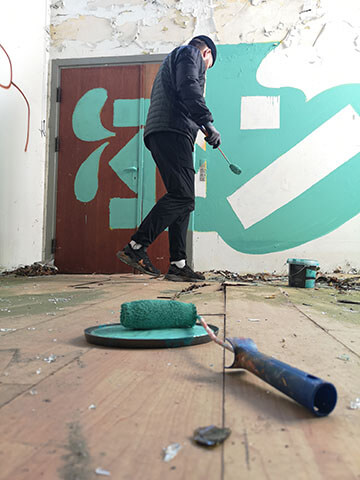
Art as a means of self-expression
To shed more light on this topic of what is the difference between graffiti and street art, we spoke to an expert in this area. Christian Bach, a digital design specialist based in Denmark, has been involved in artistic activities for decades, both inside and outside Cook Medical. We also chatted about his participation in the creation of a mural of Bill Cook and Dr. Charles Dotter at Cook’s facility in Bjæverskov, Denmark.
But how did Christian, who grew up in Odense, become an artist, and what does he think about these various art forms?
“I grew up in a creative environment. I have always drawn and doodled since I was a child,” Christian said. “Moreover, my family has always encouraged me to pursue my artistic tendencies, without demonizing them.”
“My mother, for instance, paints and draws,” he continued. “My grandfather made wall clocks from scratch. But the true revolution in my life came in 1983, when something new, modern, and a bit outrageous landed on Danish shores: the documentary film Style Wars turned my world upside down. It focused on hip-hop culture, graffiti, and also introduced me to concepts such as b-boying and rapping.”
Christian soon joined a breakdance crew, but—by his own admission—he was never much of a dancer. He was more fascinated by the social and artistic implications brought about by this new counterculture. He started doing some “tagging” in 1986. At first glance, tagging entails the repeated use of a single symbol or series of symbols, but to him, it was so much more. Through this art form, young adults would peacefully compete against other crews.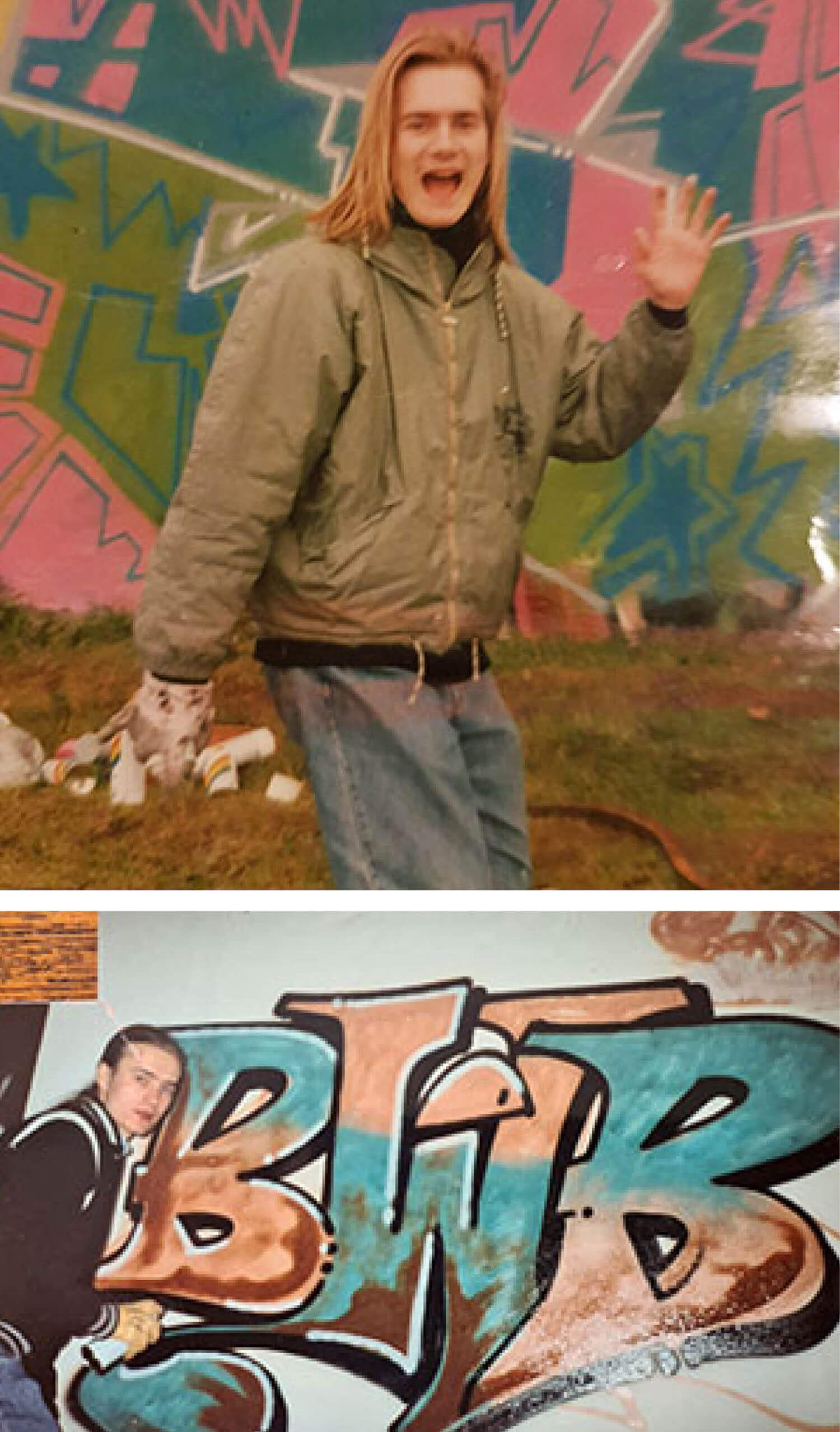
“In general, graffiti writers are unconcerned with the public’s reactions to their work—its main intent is not to please or charm the masses. It is not created—as often happens with street art—with a specific audience in mind,” he said. “In hindsight, to me it was a means of self-expression, it pushed me beyond my limits, and it gave me an adrenaline rush. It was a peaceful rebellion against society. More practically, it was also a way to escape long exposure to my Commodore 64, an 8-bit home computer.”
At no point are art and life static
Christian continued to tag mainly in Denmark. He wrote on trains and walls, and at this point in time, his lettering was pretty much in a comic style.
“In 1993, though, I thought I needed an education and, in parallel, my professional career started,” Christian said. “I worked in a couple of advertising agencies in Denmark. I knew I had to make a decision in relation to what I wanted to do, work-wise. I chose to become a graphic designer, instead of an IT programmer.”
In 2003, his artistic streak was revitalized. Christian started graffiti writing again, but his style had changed. It evolved and became a bit more artistic and more expressive.
“I think a great source of inspiration was the internet, which immensely expanded in those years,” he said. “One could be sitting in Denmark and see graffiti works in Australia. For instance, in those years I had a lot of fun painting monikers inspired by late 1890s North American hobo graffiti. There were many legal walls in my city, so I could practice with some other local artists.”
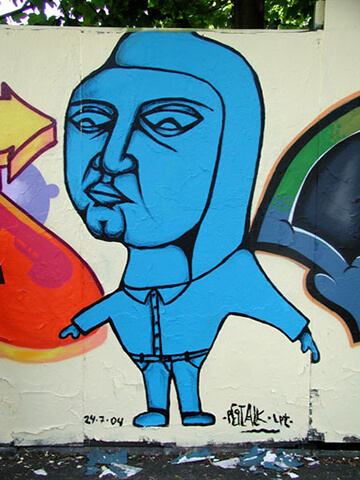
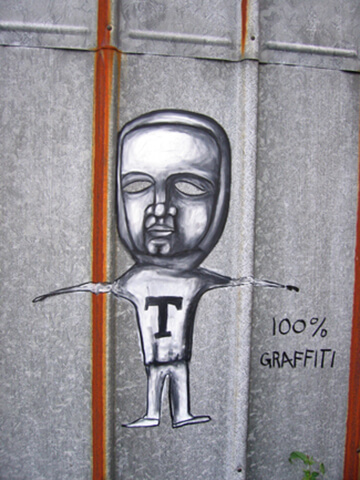
Monikers are also known as “hobo art” or “streaks.” They usually appear on freight cars or trains. In general, moniker artists share stories or a moment in time with others and have unique features, such as including the area they are from or date of the streak. In some cases, the artists include a short phrase to accompany the moniker.
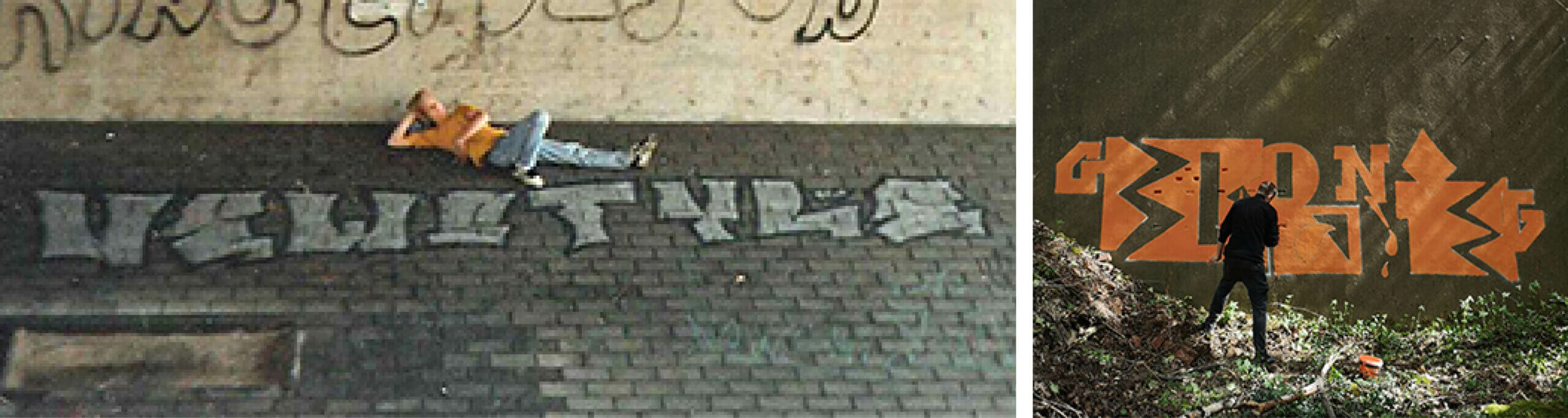
The gallery below is a sampling of the moniker-inspired art Christian painted from 2004 to 2014.
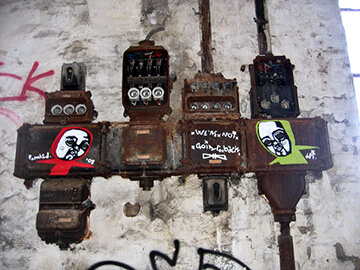
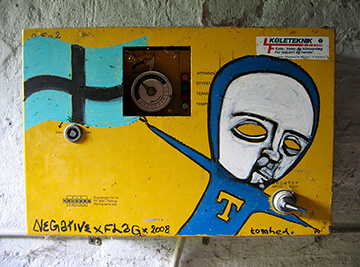
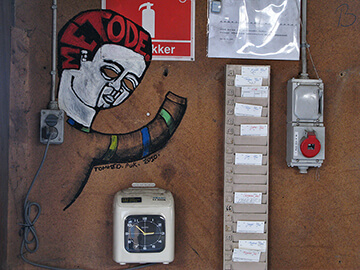
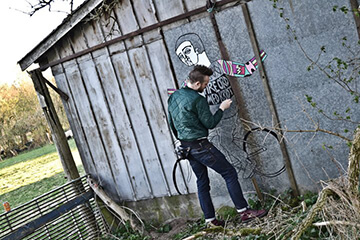
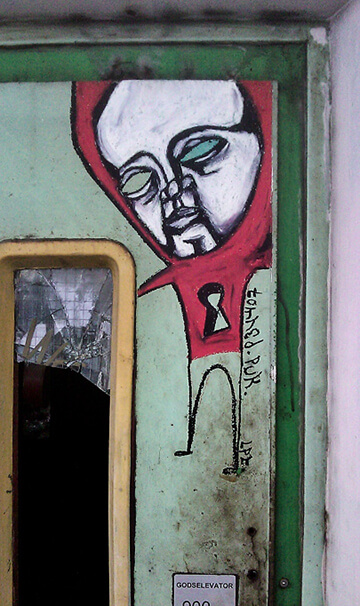
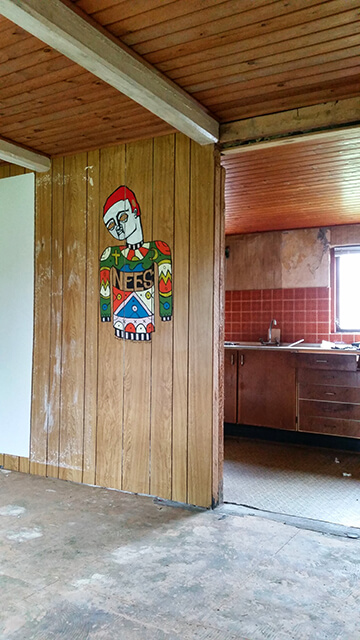
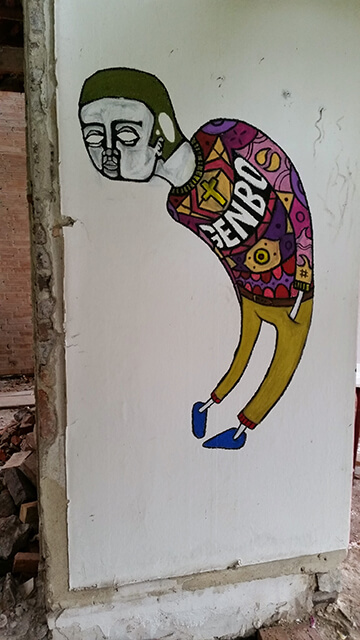
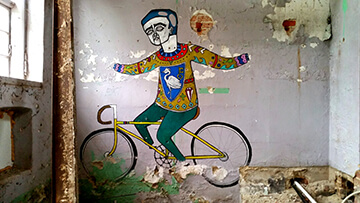
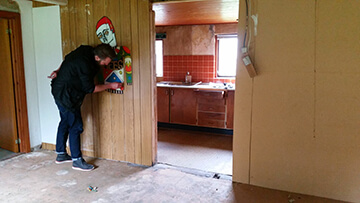
In those years, Christian began writing on walls in abandoned buildings, both in Denmark and abroad. His drawings were often inspired by the history of those constructions, about which nobody cared, as they were going to be destroyed pretty soon. This activity went on for approximately four years, and then Christian had an exhibition with his fellow painters in Copenhagen, where he had moved in the meantime. Traveling abroad was a great networking opportunity for Christian. He would meet other graffiti writers, and he would share experiences and a few laughs, too.
“After the exhibition in the capital city, we also published a book about our art activities in forsaken buildings and in unfinished structures,” Christian said.
When I interviewed him, we ended up talking about the latter type of edifices, as both Christian and I share this area of interest. Unfinished construction projects can be found all around the world and have often been relegated to an inescapable interpretation as symbols of failure; however, they have a very peculiar type of beauty, the beauty of “what could have been,” of “what is not yet there,” and of “what might be one day.”
Christian painted some of these buildings that lie in an eternal wait, in a limbo between perfection and nothingness. They were given up halfway through their constructions and became ruins before they were ever used: hospitals without patients, theaters that have never seen their premieres, etc.
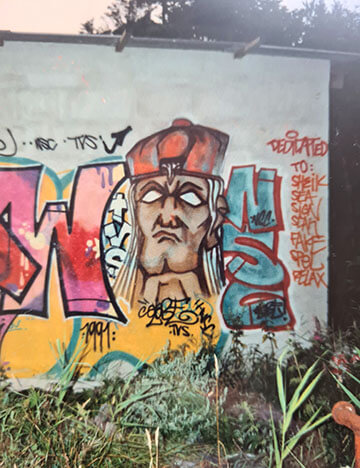
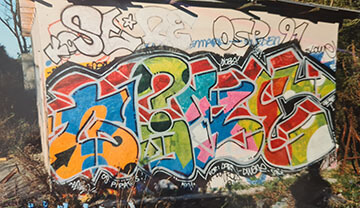
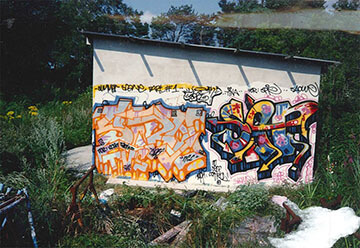
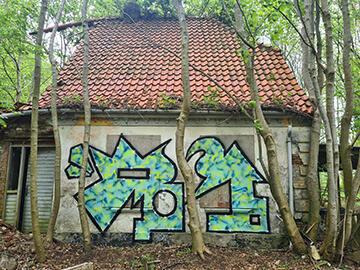
Below is a collection of Christian’s wall art from 1991 to 2022.
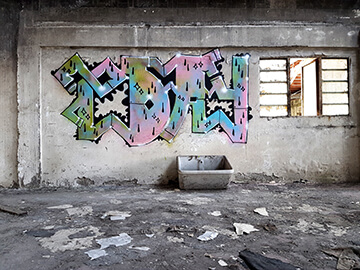
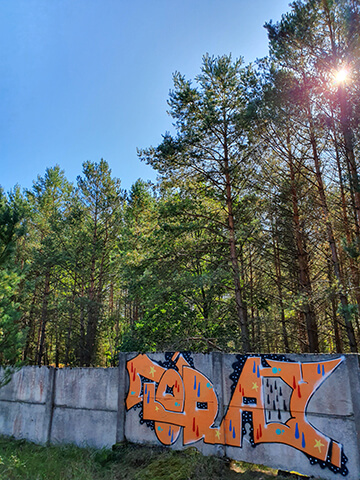
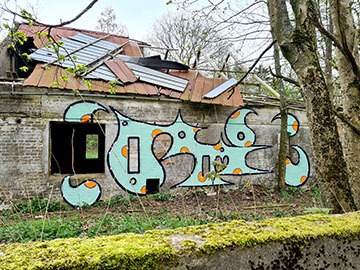
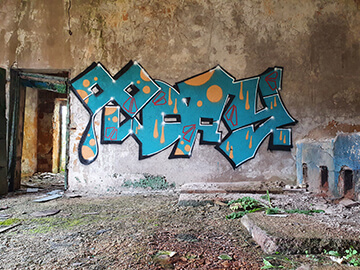
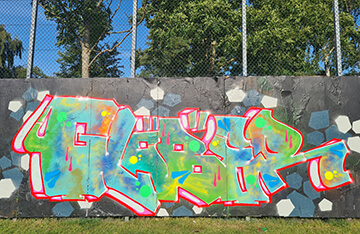
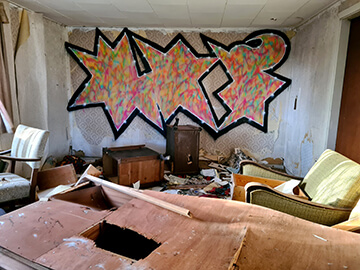
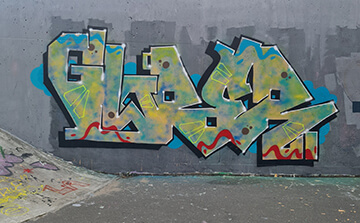
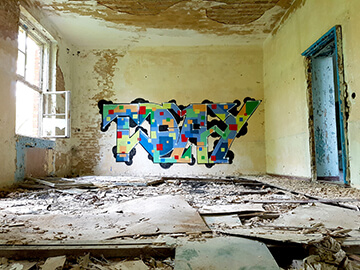
A mural for Cook Medical
“When I paint graffiti, it is something I do for myself,” Christian said. “It makes me feel free and alive, and it has always helped me to continue to be creative and active outside work.”
Nevertheless, in the beginning of 2020, Christian had a great opportunity to combine his work at Cook and his passion for street art and graffiti. He was approached by his manager, Jesper Frimann, who asked him to create a mural of Bill Cook in our plant at Bjæverskov. 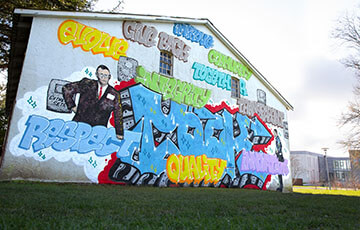
“It took us around a week, max, to paint this mural,” he recalled. “Before starting it, we researched a few photos of Mr. Cook and Dr. Dotter online, and I did a sketch on Photoshop of what the painting would look like when we finished. I think that part was necessary to visualize our ideas for this amazing project.”
“Then, that week, both Pernille and I came to work at the plant, put on our protective work garments, and spent time doing what we both loved the most. I felt very honored to be given this chance by the company. And we had a lot of fun, too,” Christian said.
To check out Christian’s Instagram account, click here. To learn more about the Bill Cook and Dr. Charles Dotter mural, the painting process, and to see more photos featured in the Angiogram, click here.
References
1. “Street art” vs. “graffiti”: What’s the difference? Dictionary.com website. https://www.dictionary.com/e/street-art-vs-graffiti/. Published September 14, 2020. Accessed October 12, 2022.
For more stories
Want to check out more Life@Cook blog stories? Click the images below.

Great story! You are so talented!! Thanks for sharing!!
Thank you, Melissa!
Great story, Vanessa! And great artwork, Christian! Thank you both for sharing this. We have so much hidden talent at Cook!
Agreed. Christian’s artistic journey was so much fun to describe!
So cool to learn about your second career, Christian! And thanks for putting visual art into words, Vanessa!
Thank you for reading us, Jasmin!
Great interview, Vanessa!
and Christian, Thanks for sharing 🙂
Mange tak, Charlotte!
Thank you Christian for sharing your cool story. I love your 1990-haircut 😉
Thanks Vanessa for bringing the story to us all.
Thank you very much, Jesper!
Way to go Christian.. I’m honored to call you my colleague!
Thanks for sharing Vanessa.. as always, you know how to put in those words and capture the audience
Dear Linda, thanks a million for your kind words. It was so interesting to learn about Christian’s talent!
Great Art, really like this!
thanks for Sharing!
Danke, Claudia! It was so much fun to talk to Christian about his artistic adventures!
Thanks, Wendy!
Thank you for sharing this! Beautiful and interesting art.
Thanks, Sara! I agree, Christian is super talented!
That’s killer! Beautiful work – thanks for sharing.
Thanks, Jason! It was so cool to talk to Christian about his art!
Love this! Thanks for sharing!