A journey 22 years in the making
Vilmos Kovacs looks back along the road to becoming a US citizen
In the early 90s, Vilmos Kovacs, IT director for Cook Inc., was a teenager, and swimming was his life. Growing up in Hungary during the communist era, Vilmos didn’t have many material things in his childhood, but he did have a drive and dedication to be the best swimmer he could possibly be. “If you are an athlete in Hungary and if you are really good,” Vilmos said, “you live in a bubble. I traveled all over the world for swimming competitions.”
In 1995, Vilmos traveled from Hungary to Madison, Wisconsin, to work with a coach for two months and brush up on his English, and it changed his life. He worked with the coach tirelessly and resolutely, honing his swimming expertise. His coach decided to retire, but not without praising young Vilmos for his diligence and devotion to competitive swimming. He contacted many of the Big Ten colleges, telling them about the “good Hungarian swimmer.” Coaches from the University of Michigan, Indiana University, Purdue, and others came to Wisconsin to visit with Vilmos. “They all made offers,” said Vilmos, “but I made my decision not so much on the offers and the school but whether I liked the coach. I really liked coach Dan Ross from Purdue. We became good friends. I signed with Purdue and received a great opportunity to get my education and continue swimming.”
Culture shock
In the fall of 1995, Vilmos left his homeland and came to the United States (US) to study at Purdue on a student visa. Before he arrived though, he attended the World University Games in Japan, which delayed his arrival for the first semester. Despite the confidence gleaned from being a world traveler and from being away from his family and country for swimming competitions, Vilmos was still like a fish out of water in America. This experience was different, but he had made his choice. He was on his own in a foreign country for much longer than the length of time for a swimming competition. His English was poor, he was at a disadvantage coming in late in the semester, and American classroom work was distinctly different than his studies in Hungary.
“For the longest time, I didn’t realize I had to read and pay attention to the syllabus. I was always getting dinged for that!” said Vilmos. Tests in Hungary were mainly written or oral presentations. The American preference for multiple choice styled testing posed a challenge for Vilmos. “I also needed to get used to the fact that there was no public transportation system. Getting to Kroger and other places that we all take for granted was difficult for me,” he added. “I was not just without a car, but I had no driver’s license either.”
With an inquisitive spirit and determination, Vilmos transitioned to life as a Purdue University student and athlete. “I asked a lot of questions,” he said. “And the Purdue University Athletic Department assigned a mentor to me who helped with things like opening a bank account and getting my driver’s license.”
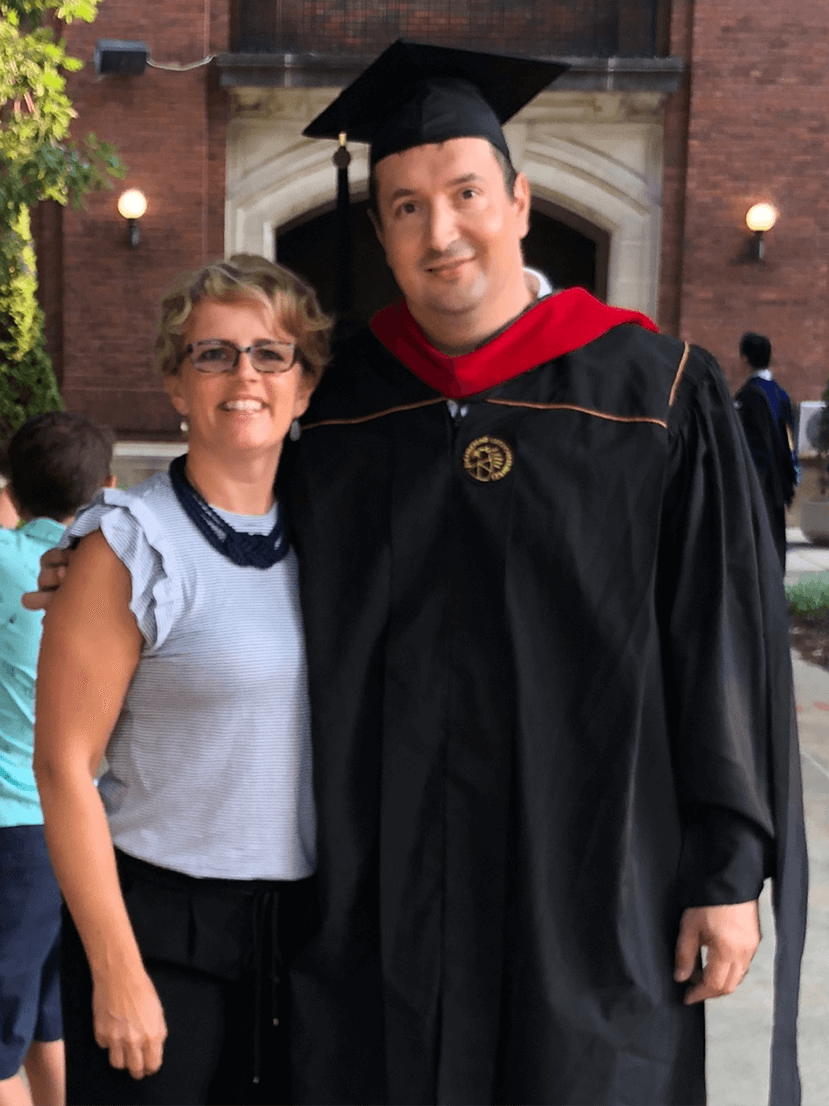
During his Purdue athletic career from 1996 to 1999, Vilmos was a Big Ten Champion, an All-American swimmer, and a four-year letter winner on the men’s swimming and diving team. He graduated from Purdue with a double minor in computer science and information technology and received a degree in industrial management. Last year, Vilmos earned a master’s degree from Purdue.
Starting a career and a family
After graduating from Purdue, Vilmos was offered an application developer position at MED Institute, a Cook company in West Lafayette, Indiana, where Purdue is located. He had a one-year working permit, but after one year, immigration laws required Vilmos to obtain company sponsorship for an H-1B visa, which allows companies to employ foreign workers in specialty occupations for a short term.
“At the time, dot coms were booming, and Cook needed IT people,” explained Vilmos. “I was the first foreign employee at MED Institute. We learned the working visa process together.” There are many legally required steps that have to be completed for a non-US citizen or non-Green card holder to do in order to be approved to work in the US. Cook’s legal counsel helped guide Vilmos and MED Institute through the lengthy multiple year process.
The working visa was good for three years and could be renewed for another three, which worked perfectly for Vilmos. He was originally planning to be in the US for a short amount of time, but a twist of fate led Vilmos on a different path. He met Sylvia, a Hungarian woman in the US, and they became good friends.
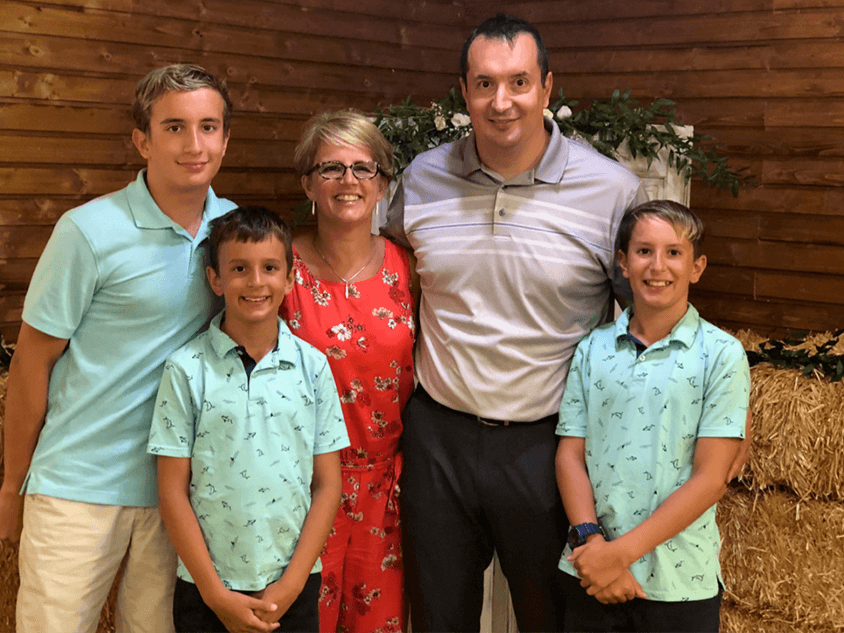
“Within a few weeks after meeting, we got married,” Vilmos said as he smiled and shook his head. “It turned out being one of the best decisions of my life. We have been married now for 17 years and have three sons, who were born here and are automatically US citizens.”
Vilmos continued to stay with Cook as his career took a new turn in 2009 when he became IT manager for Cook Research Inc. (CRI). Last year, Vilmos accepted the role of IT director for Cook Inc.
Continuing the journey to US citizenship
With Vilmos’s work visa and Sylvia’s spouse visa, the couple settled into life in the US.
Sylvia’s spouse visa did not include a working permit but allowed her to attend a university. While they were figuring the next step, Sylvia finished her marketing degree from Ivy Tech and was ready to start working. She needed a green card. They both decided to apply for green cards together. “We hired a lawyer and started the green card process around 2005. Eventually after a year or so we received the green cards. Once we got the green card, it was a huge relief for us. It was good for ten years, granting us all rights as US citizens, except we could not vote or serve on a jury,” explained Vilmos.
When the green card expired in November 2017, the Kovacs had a pivotal decision to make. They had several options: they could choose to leave the country, renew their green card, or apply for citizenship. “We decided to apply for citizenship. Once you have a green card for at least five years, you become eligible to apply for citizenship before the ten-year expiration. It took us about six months to achieve citizenship,” said Vilmos. The Kovacs went through finger printing, background checks, and an interview with an immigration agent. In May 2017, they were granted US citizenship and took the oath during the naturalization ceremony in Fort Wayne, Indiana. “It was a 22-year experience for me that began in 1995,” added Vilmos.
“My wife and I and our children are now dual citizens of Hungary and the US. All of my family is in Hungary, and we send our kids to Hungary every year. My parents and family always want to see them. We want to pass on our Hungarian heritage to our children,” said Vilmos.
In the recent election, Vilmos and Sylvia voted for the first time. Vilmos did some research before voting, but was still shocked at the number of candidates. Hungarian voting uses a simpler ballot with many parties listed; however, voters do not vote directly for the president. They vote for the party leader.
“I was excited to vote and do my part,” said Vilmos. “Opportunity is great in the US. I have been working for Cook for 18 years. I came here with 2 suitcases, and now I have a comfortable life, a beautiful family, and great friends. I’m pretty sure I made the right choice to stay.”
This was a beautiful story. Thank you for for sharing your personal and professional journey. Congratulations on your recent citizenship!
Super positive story, Vilmos and lovely family. Thank you for sharing, and congratulations on your degree and your citizenship!
What a beautiful family, wonderful story and journey. Thanks for sharing.
Mary
Congratulations, Vilmos! It seems like just the other day when you started work at MED (now CRI). We really miss you at CRI!
Yes Sara, it seems yesterday. I still remember, that time the whole company interviewed you…
I’ve passed somehow.
@Vilmos – I had no idea about your past. That was really interesting. Congratulations on your citizenship!
Vilmos, you’re an amazing man with a beautiful story – thanks for sharing!
Beautiful story on hard work and success. Cheers from Brazil.
Congratulations to Vilmos and all the Kovacs! Missing you at CRI
Amazing story! So glad to have you on the Cook team!
This is a fantastic story! Thank you for sharing!
You sure did make the right choice! Joining the chorus of missing you at CRI, but glad to know you’re happy — what a beautiful family!
What a wonderful story!
Quite a success story, strength and determination!
Thank you for sharing the inspirational message.
What a wonderful story. Congratulations to you and your family and the choices you have made.
That was a beautiful story. Pleasure to read. Made me smile
Thank you, Carolina, for your comment!
Life is full of decisions , choices and blessings. Looks like you’ve hit the jackpot on all three….. loved your story Vilmos.
Yes Pamela, you’re correct, I truly feel blessed! Thank you!
Vilmos thank you for sharing your story! Really enjoy working with you.
Fantastic story. Fantastic family!
Great story Vilmos! What a journey! A testament to hard work, determination and drive!
Vilmos I enjoyed your story and journey about coming to America and becoming an American citizen. Glad you chose Cook as your place of employment.
What an inspirational story!
Wonderful article. Very well written, Teresa! I can relate to his experience with culture shock and the need to ask a lot of questions. I admire him for sticking to it and making a wonderful life for himself and his family. We certainly need more people like Vilmos and Sylvia in this country.
Looks like his sons might be following in his swimmer “shoes”?
Thank you for your comment, Debbie. Vilmos’s journey was a triumph — all the makings of a good story — courage, determination, and success!
Thank you, Debbie! Yes, I love to watch my sons competing in swimming. I’m so proud of them!
Thank you for everyone’s comment. Cook and people at Cook are big part of this story!
Vilmos,
What a great story! I’m glad to have had the opportunity to work with you at MED and CRI.
Congrats Vilmos and Family
Great Story and thanks for sharing this with us
Vilmos,
Thank you for sharing your journey and for your good work on behalf of Cook! Good choices by you and Cook!
Beautiful. Thank you for letting us be a part of your journey. Have a wonderful day.
Vilmos thank you for sharing your story, I loved and we are so grateful to have you as part of our team.
Great story!
What a great story! My parents were immigrants as well. It was a great honor for them when they became US citizens and earned the right to vote. They never missed an election.
Vilmos – Great story! You’re an inspiration to all…..
Congratulations on the citizenship! Thank you for sharing your journey with us!
I really enjoyed this story! I read every word! Its great to know more about the people who make up our company!
Thank you for commenting, Jana. Everyone has an encouraging story! I hope more people are inspired to share their stories on the blog!
Congrats Vilmos!! Not the same at CRI without you.
Love this story!
Thank you for commenting, Christa. Vilmos’s story is inspiring, and I’m so happy he shared it with us!
Congrats Vilmos! We miss you here at CRI!
Wonderful story! Thank you so much for sharing!
Thank you for your comment, Amy!
Thank you for sharing your incredible story!
Great story!
Thank you, Teresa. We are pleased Vilmos shared his story of perseverance and success!