A true display of community resilience and helping others
Learn about the role Cook Aviation played with Hurricane Helene disaster relief support in 2024
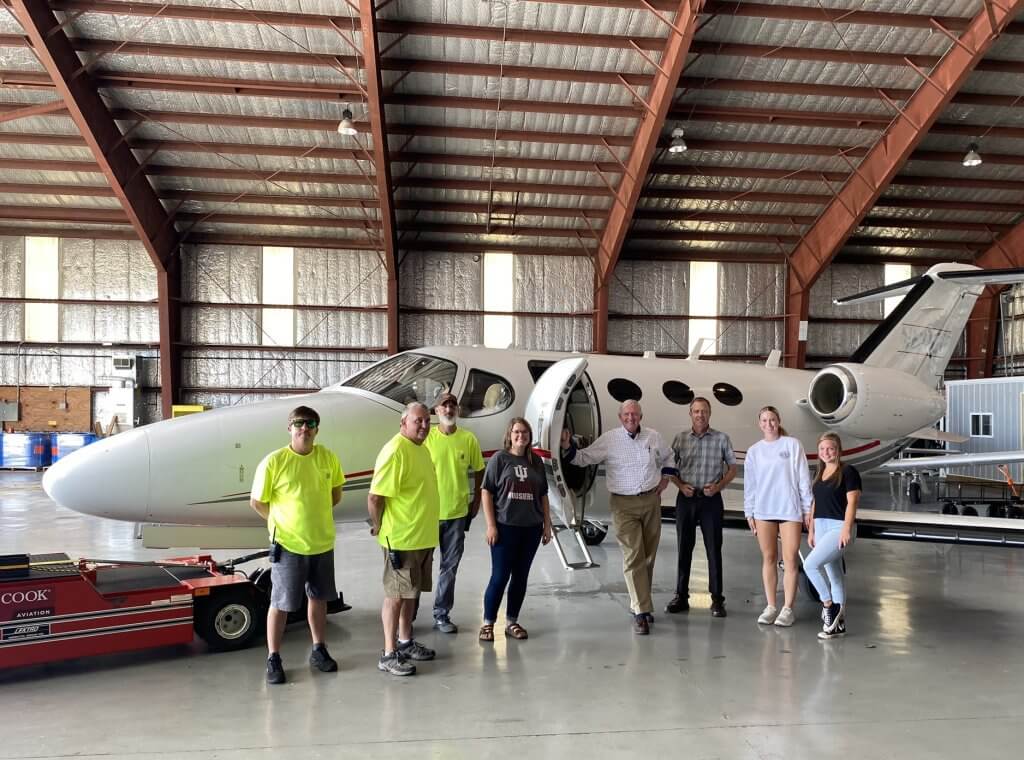
When disaster strikes, there are many unsung heroes and everyday people who rise to the occasion to help those in need. This story celebrates the employees at Cook Aviation for their dedication to living Cook Values by helping others, acting with integrity, solving problems together, and giving back—especially during a time of extreme adversity.
In September 2024, Hurricane Helene, a Category 4 storm, made landfall in the United States, and was ranked as the third-deadliest hurricane of the modern era.¹ The National Weather Service reports that Helene’s largest impacts were across the southern Appalachian Mountains where widespread severe and unprecedented flooding occurred with hundreds of fatalities and billions in property damage. Strong wind damaged properties and blew trees and power lines down in a swath from the Gulf Coast to the North Carolina mountains, including many unprepared, unsuspecting inland areas.²
In the wake of the hurricane, disaster support teams and organizations immediately went into action to support the communities impacted by the natural disaster. One major component of this is coordinating with airports across the country to coordinate schedules, collect donations, work with pilots and drivers, and get the life changing supplies to the disaster sites as quickly and safely as possible.
An immediate yes
When the Civilian Crisis Relief Team (CCRT), a civilian volunteer group, contacted the Monroe County Airport about aiding in the disaster relief efforts they connected with our team at Cook Aviation, who share the same airfield and land with the county airport. When they asked if we wanted to help, the answer was an immediate, “Yes.”
Within two hours of agreeing to help and being listed as an official donation site, people were showing up with supplies. Not long after, the American Red Cross reached out if they could also list Cook Aviation as a temporary donation site, which was another immediate yes. From then on, with the help of social media, it became an almost 24-hour operation, including the addition of informational signs, parking directions, and donation tables for the community.
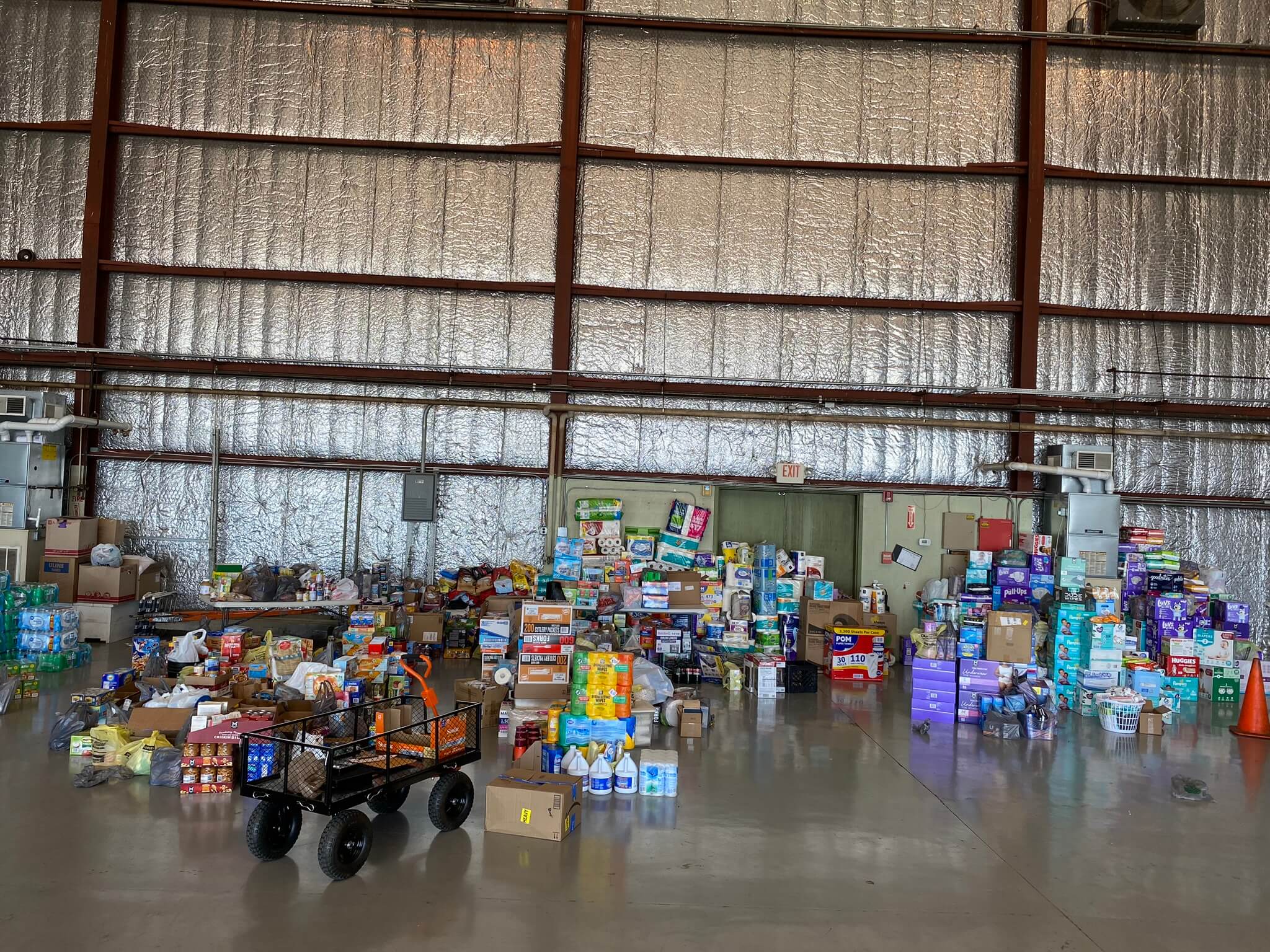
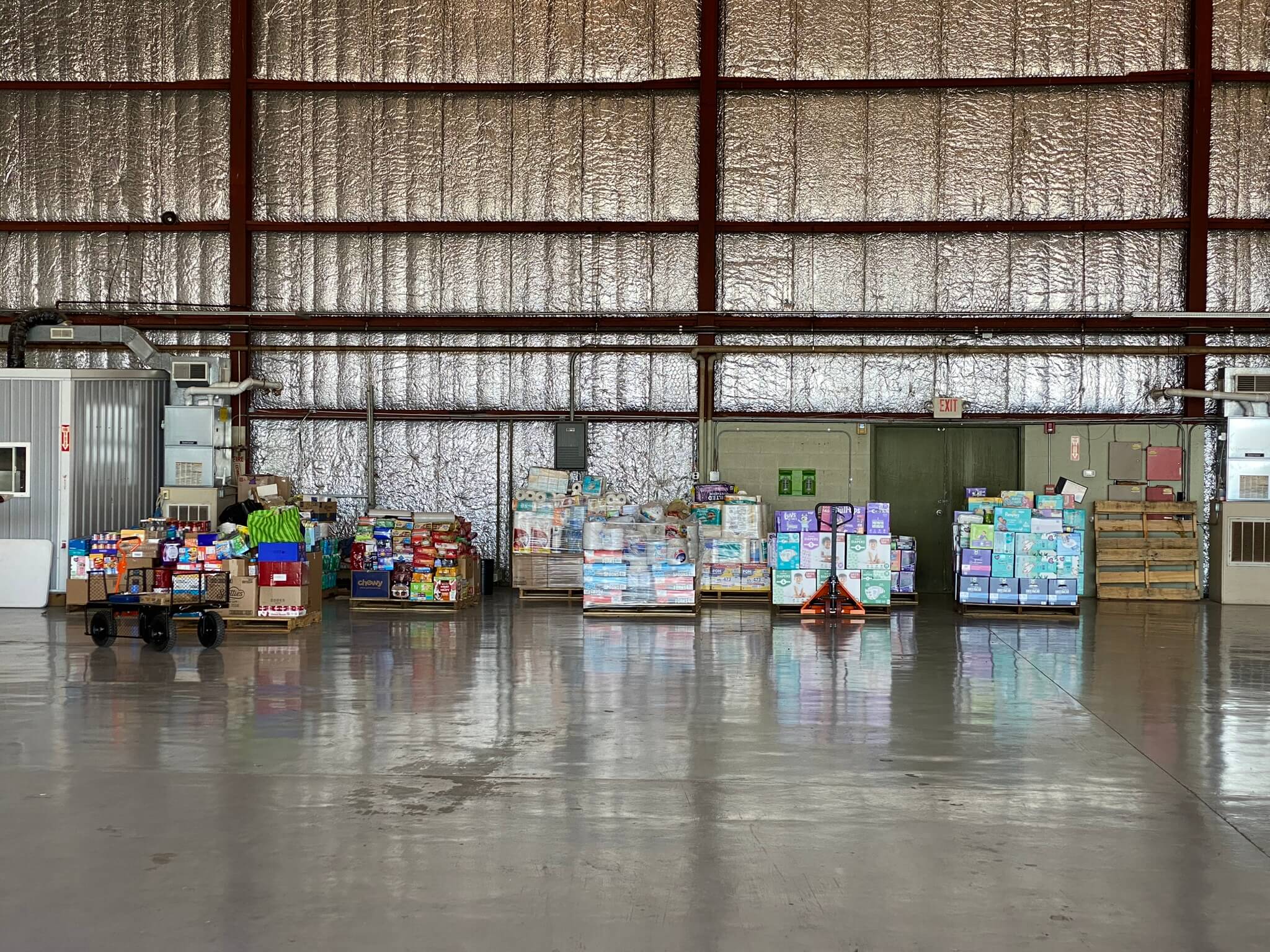
Over the next two weeks, the entire team at Cook Aviation worked diligently to help gather donations and coordinate transportation for over 16,500 pounds of supplies (approximately 7484 kilograms) out of one of the unoccupied hangars, while also maintaining the regular business functions and operations of the company.
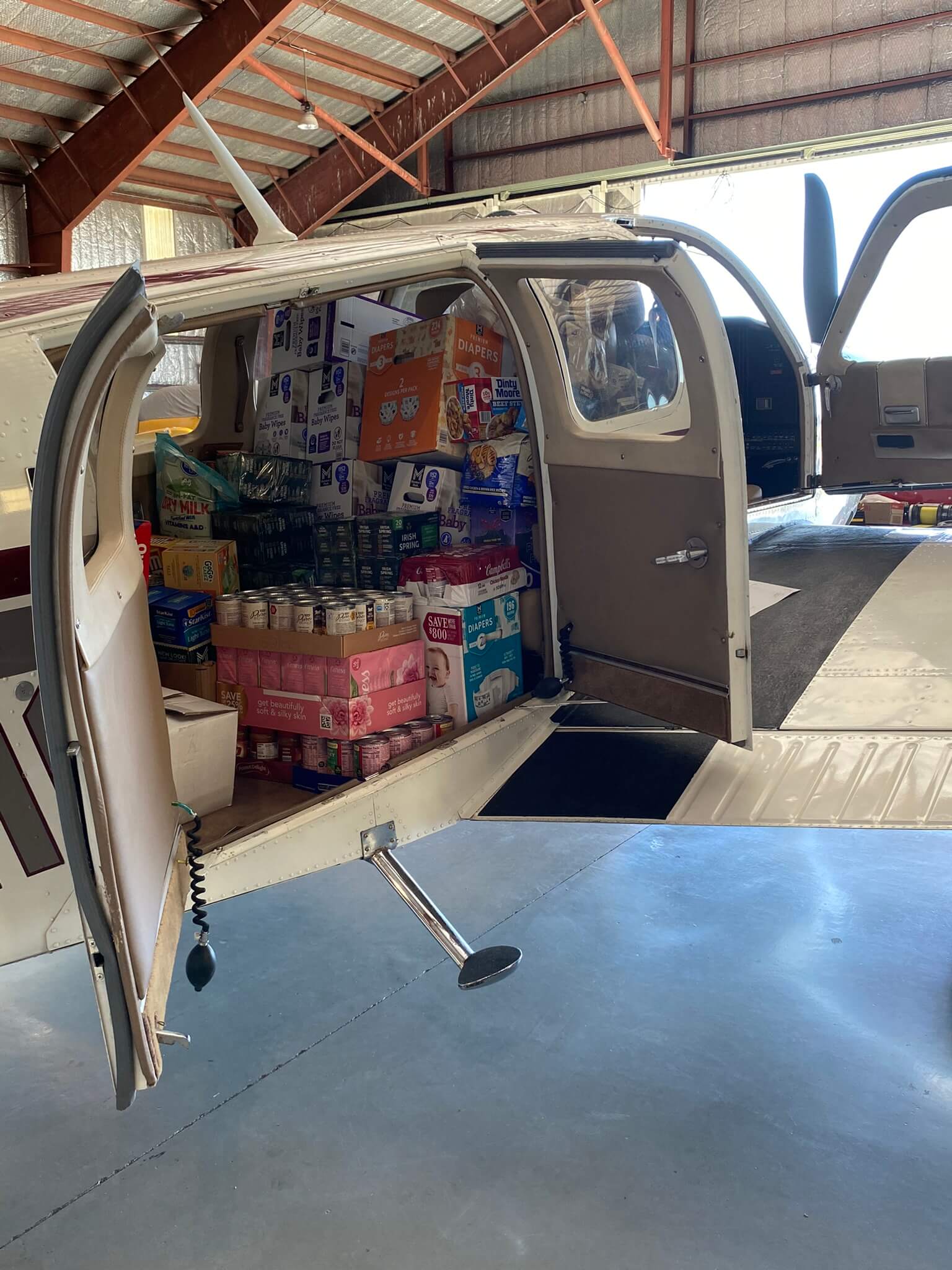
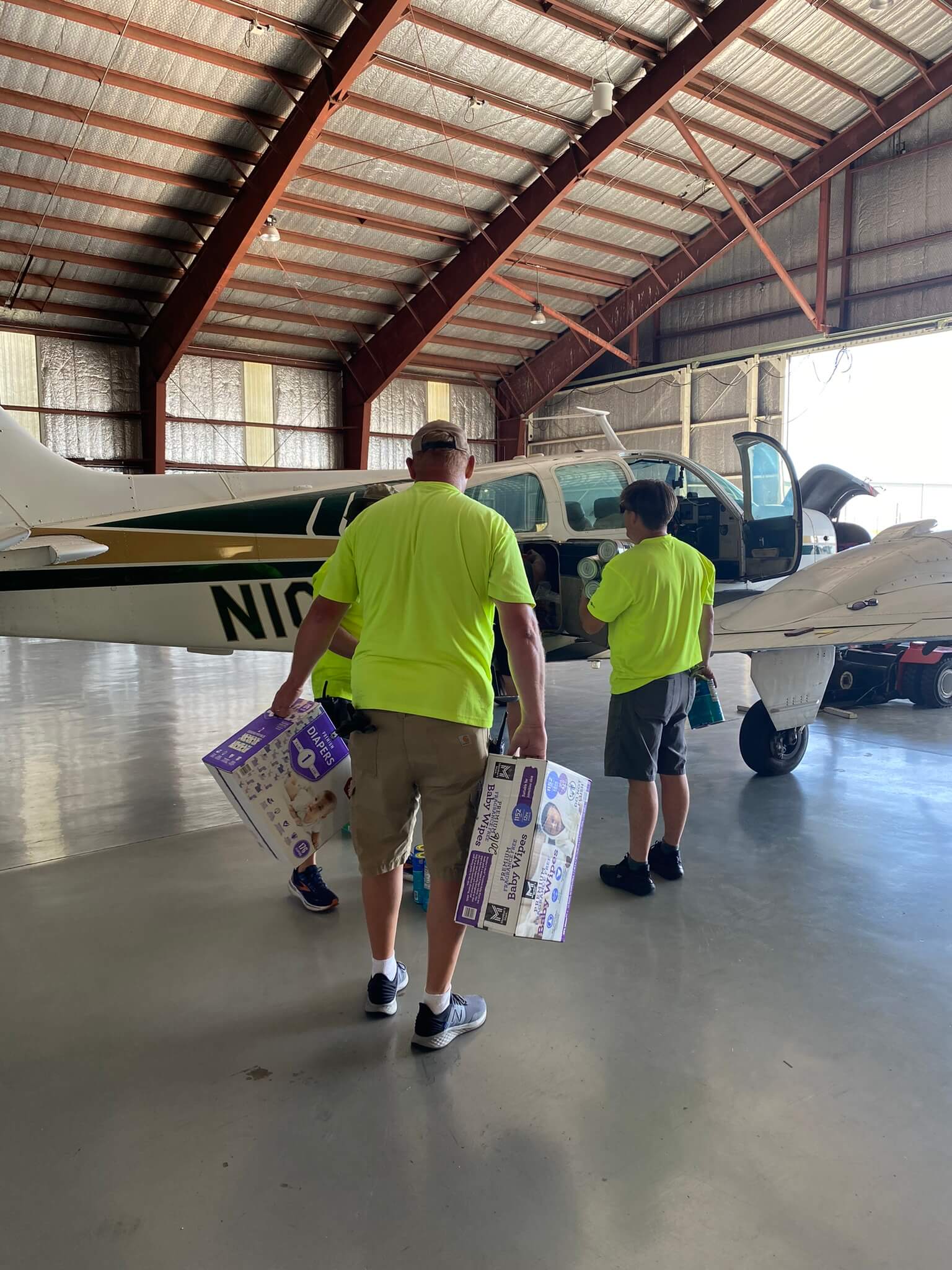
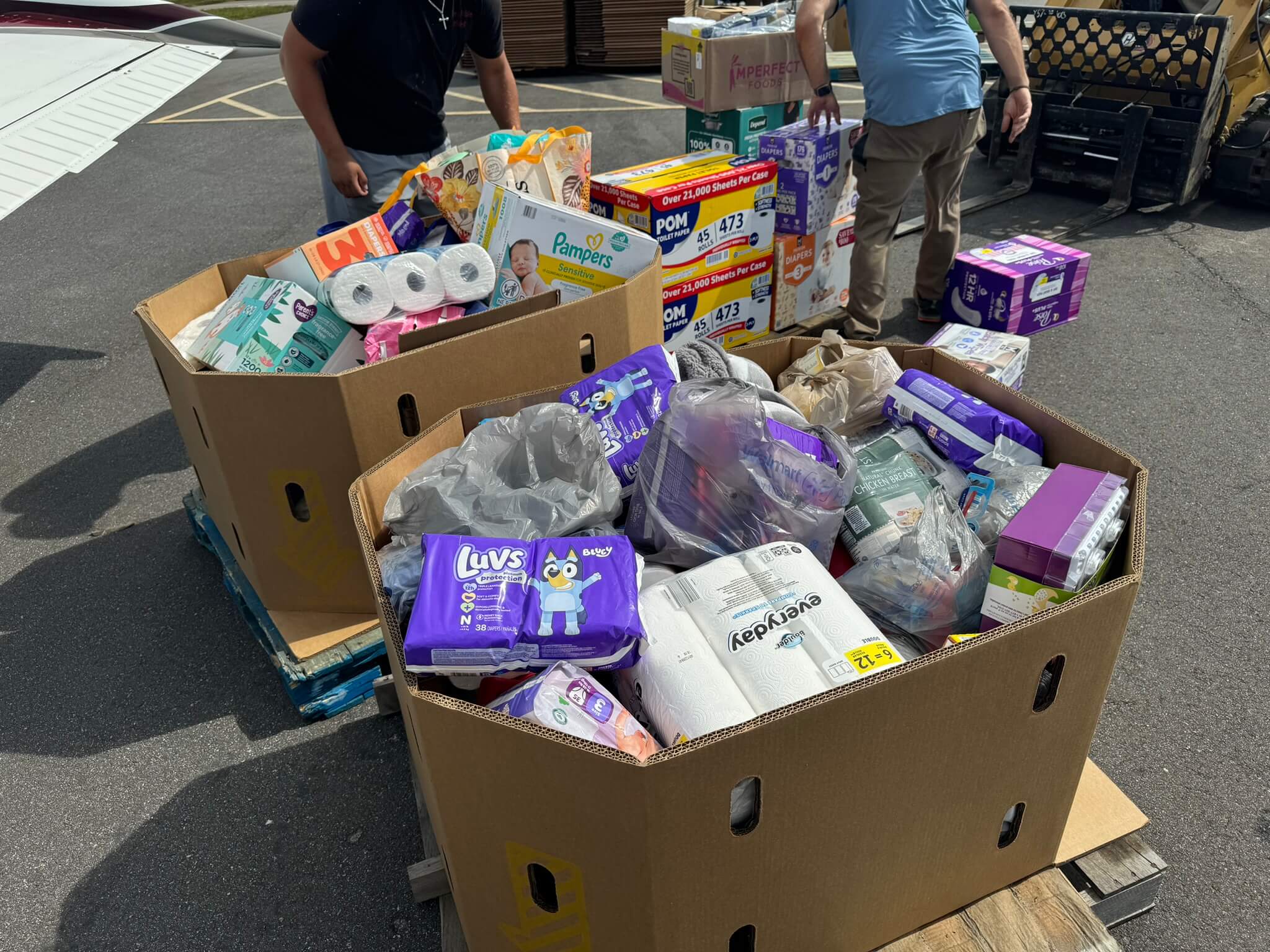
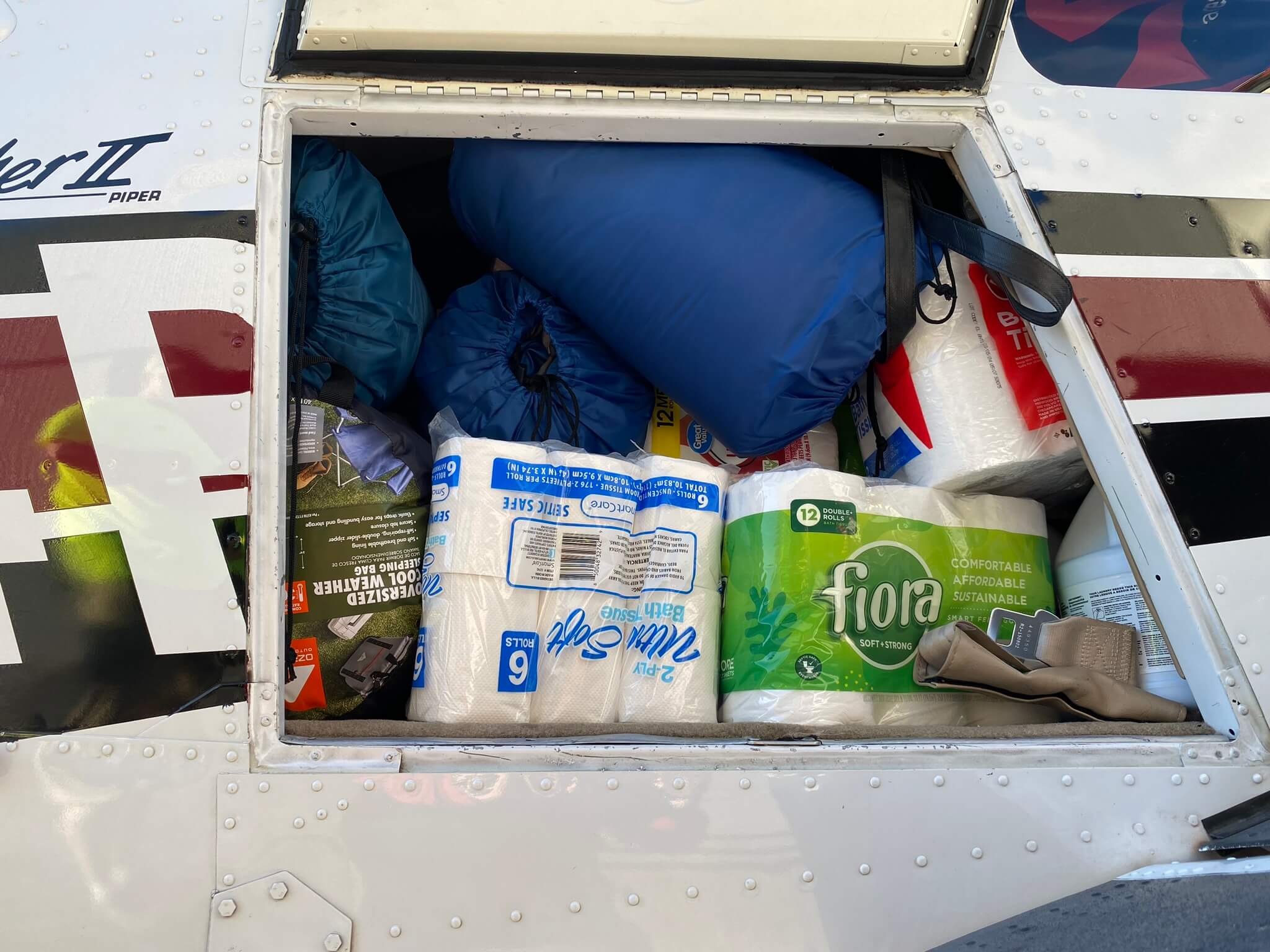
Donations included a wide variety of items such as diapers, paper towels, baby formula, batteries, heaters, tarps, food, water, medical supplies, and more. Monetary donations were also made to help cover the cost of fuel for the volunteer pilots transporting the goods to the disaster sites as well.
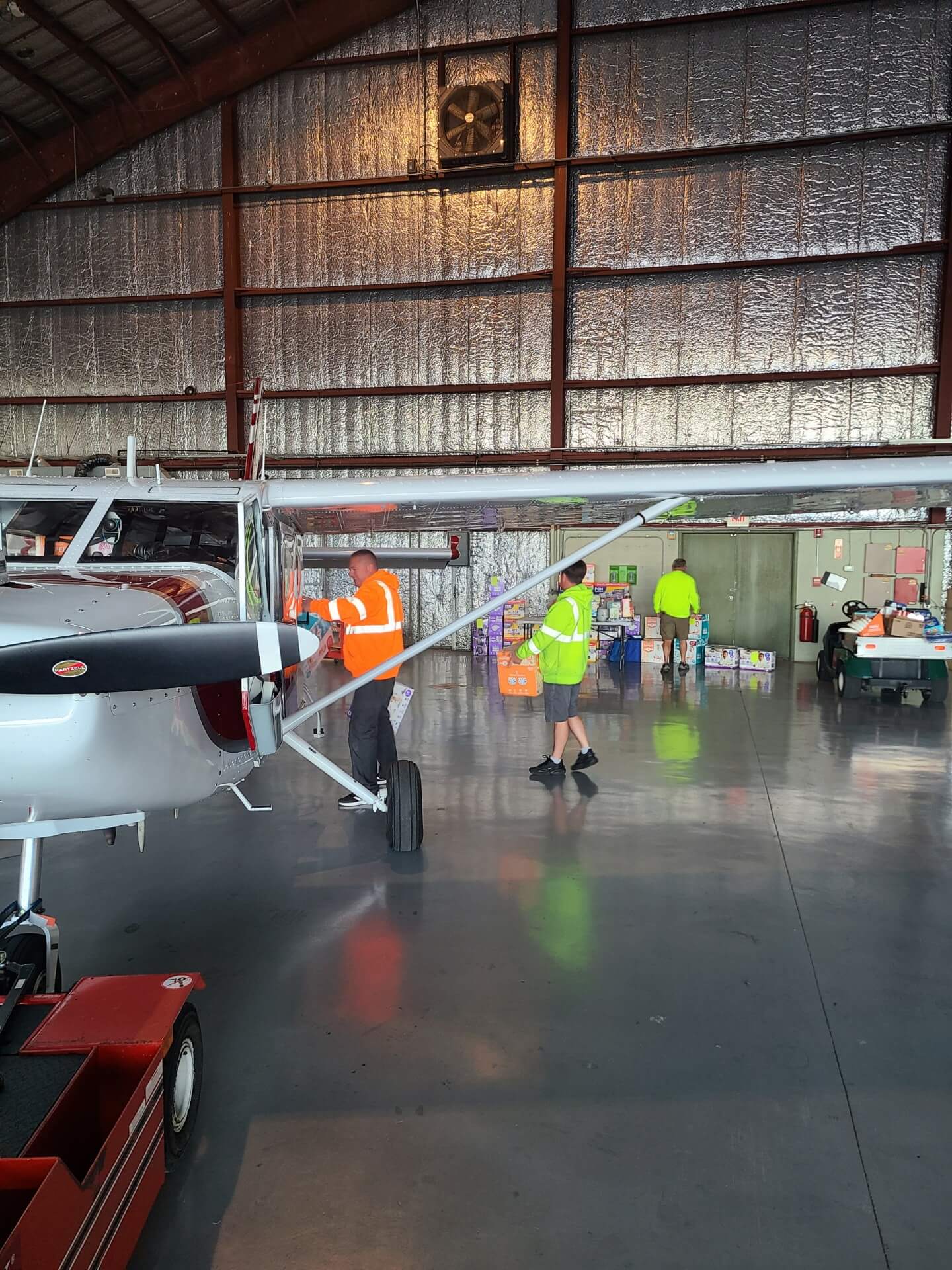
You can view some of the donations collected in the gallery below.
A big thank you to everyone who helped
“We are so thankful to all of the volunteers that helped make this mission possible, including the employees who volunteered from the Experimental Aircraft Association (EAA), Civil Air Patrol (CAP), and Monroe County Airport (MCA),” said Rex Hinkle, the president of Cook Aviation.
Along with the volunteers from the EAA, CAP, and MCA, the local churches, Girl Scout Troops, pharmacies, firefighters, pilots, and community members who donated their time, energy, and additional resources played crucial roles in helping to collect and deliver life-saving aid to many of the hardest-hit areas in North Carolina and Tennessee.
Volunteering pilots would donate their time and fuel to fly their planes filled with the supplies to the disaster sites, often sending photos and notes back to Cook Aviation sharing stories about their trips. For one of the relief trips, Cook Aviation worked with Flights for Christ to load and deliver supplies out of their large cargo plane.
“Pilots came with tiny planes, new planes, old ones, restored ones, and other types in between, and they all wanted to help,” Rex said.
Taylor Perry, the office manager at Cook Aviation, and a key player in coordinating with volunteer pilots, reflected on the overwhelming, but overall, very rewarding nature of the operation.
“It was amazing to see everyone at Cook Aviation, the community, the pilots, and all of the volunteers helping,” Taylor said. “But they didn’t just help—it was the way that they all jumped in without hesitation, and everyone worked together to do what needed to be done.”
The selflessness demonstrated was not limited to working with the physical donations; it extended to all kinds of support, including Cook Aviation employees who manned the front desk and assisted with other business functions that were vital to the entire operation, like listening to the radio to see if any aircraft were coming their way and making sure everything else ran smoothly. It was a clear to everyone at Cook Aviation that no matter their role, everyone was contributing in the best ways they could to help those in need.
Overall, Taylor and Rex were moved to see that not just the core team at Cook Aviation came together—it was an even larger community. They received support from people in all walks of life, from the local firefighters who showed up on their days off, community members and groups who collected donations, pilots from all over, and from employees’ families who pitched in, too.
For Rex and Taylor, being a part of coordinating the disaster relief efforts was an important reminder of solidarity and what’s possible when people unite for a cause.
“It was amazing to see how much people stepped up to the plate and to help people that were in trouble. I couldn’t believe how much people cared and how quickly they responded,” Rex said. “It just reinforced that no matter what happens, there’s always someone out there willing to help.”
—
References and resources
3. What is the Civilian Crisis Response Team? | Civilian Crisis Response Team
katana