“An undeletable mark in my heart and in my mind”
A split decision, a bus journey, and a group of 60 Ukrainian refugees change Catharina Eveleens’s outlook
Catharina Eveleens, a senior clinical support specialist for the Vascular division based in Den Haag in the Netherlands, traveled to the Ukraine-Poland border and waited there for a bus with Ukrainian refugees coming from the conflict zones through a humanitarian corridor. She then rode back with them to the Netherlands. Below is the interview I carried out with her on May 10.
Let’s start from the beginning. Why did you make this decision? Is this something you always wanted to do?
I did it because I could do it. Time is the only thing you have, and it was the only thing I could give them. I could spend days on Bus 17, because I am a very privileged person: Cook allowed me to go. My husband and children were fine with my decision. But other people might not be that lucky. When you do something for the others around you, you do not do it because you want people to praise you. You do it because you can. Every action counts. What you do, matters.
How did this humanitarian activity come to be?
It all started in the first week of the conflict, around February 24, 2022.
Pip, a friend of mine, posted an announcement on LinkedIn that her local Rotary club was looking for volunteers to drive to the Ukrainian border with Poland with a travel bus and drive back people who were fleeing the conflict zones. The club was able to gather many buses, more than they expected when they launched the campaign, and this humanitarian action immediately became way too big for a small organization like theirs to run. Therefore, they asked the Dutch government and the Red Cross to take over this bus line. This request was not due to the simple organizational part of the expedition, but also to economic reasons. To give you an idea, to fill a full tank of gas for one of these buses would cost around €800 ($837.73), which was understandably unmanageable for the local Rotary club.
The first couple of buses that left the Netherlands and got to the refugee camps on the Polish border had only male volunteers aboard. It turned out that the refugees (mostly women and children) did not feel safe going to a foreign land with strangers who were men. The organization realized then that women would be preferable to be on the following buses. And that’s when my participation became reality.
It sounds like it became reality very fast. What were your thoughts and emotions at that time?
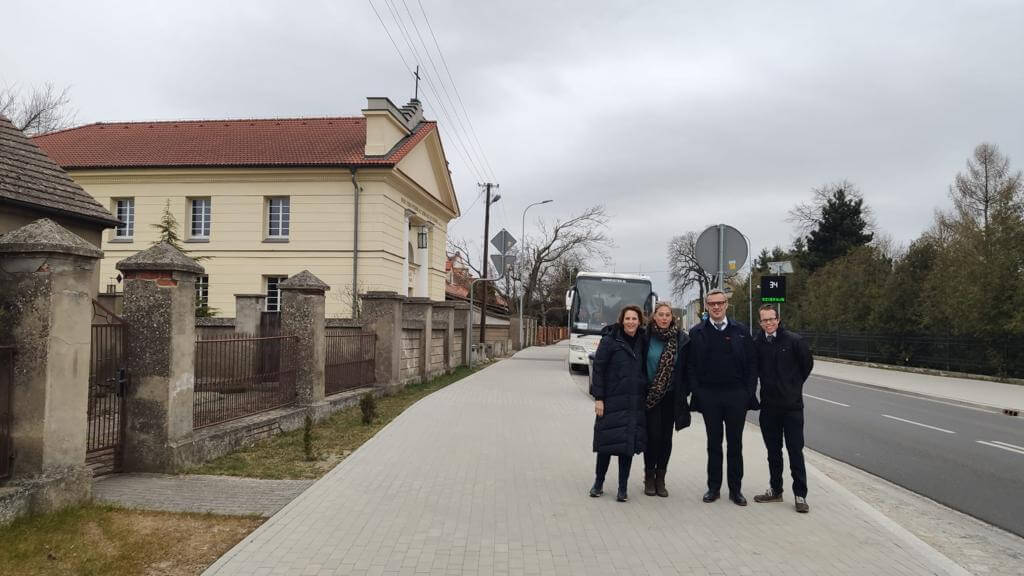
Yes, it went from concept to reality extremely fast. On a Thursday afternoon, while I was driving into my garage at home, I received a phone call, and the organization asked me if I could travel to the border on Saturday morning. Pip would join me. My husband was not at home and my three kids were still at school, but I was asked to give them an answer within the following half an hour. The 30 minutes had not even passed when I received a new phone call in which they asked me to leave for Ukraine on the following morning, instead. I understood the sense of urgency in the request, so I confirmed my availability. I was told where I would meet the bus caravan. They also specified that the people we would bring back to the Netherlands would be mothers, grandmothers, and children from Kharkiv, which had come under significant Russian strikes since the start of the war.
Looking back at that moment, I felt a huge rush of adrenaline. I called my husband and asked him to be home as early as possible. I also rang my manager at Cook and my Human Resources (HR) representative to ensure that I had their permission to take time off. I knew in my heart and soul that they would not decline my request. Later on that night, I sat down with my eldest son, who is now 10, and he was afraid for me. I explained to him that I would not go into Ukraine. And then, the following morning, at 5:30 am, my husband drove me to the meeting point on one of the highways in Den Haag. Once there, I met the bus drivers, who were not sure that any volunteers would actually show up. But Pip and I were there, so we left the Netherlands together.
How was the journey to the Ukrainian border?
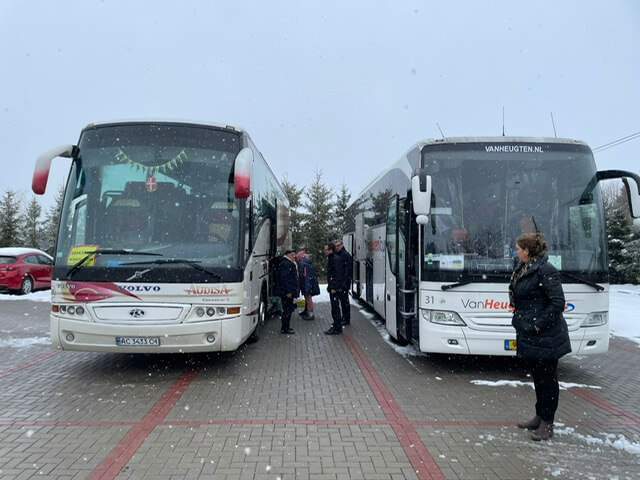
At first it was laid back. For the first time in many years, Pip and I were able to spend some time together without our families. The volunteer bus drivers, though, had it tough. When we entered Poland, it started to snow, and they had to deal with a very bumpy ride. Moreover, we could not stop. If we could not make it to the border, there would be people waiting for us there, so this was really not an option. We arrived at the hotel at the border at 10:00 pm.
During the journey, we received more and more information about the 60 people we would meet and bring back to the Netherlands. We learned that there were pregnant women, while other passengers had diabetes and possibly skin wounds. I am lucky because I have a medical background and I am a certified radiographer, so we could check the availability of medicines and basic medical devices to address their needs.
In the hours I was on that bus, it began to dawn on me that I would be meeting human beings, real people fleeing a war zone, who might have witnessed unspeakable atrocities, who might be hurt, and who might have lost most of their families in Ukraine. In the blink of an eye, everything changed for them. It is not that I did not think of it before leaving. It all just became incredibly real during the bus journey.
I began to wonder about their future too. In Western Europe, at that point in time, it was pretty clear that this would not be a quick conflict. It never is for those that are involved. When I met these people, instead, I realized that they thought it would be a temporary and quick departure, because they were completely cut off from the news. They thought that they would be back to their homes after a few weeks. And also–what about the future generations? How long will it take them to come to terms with the atrocities?
When you got to the border, what happened?
At first, we learned that there was a delay as the bus was stopped by the Polish authorities. One of the passengers brought too many cigarettes onboard. They were coming from a bombed town, and they thought they could trade them in wherever they would end up. I guess we are quick to judgment if we are privileged people.
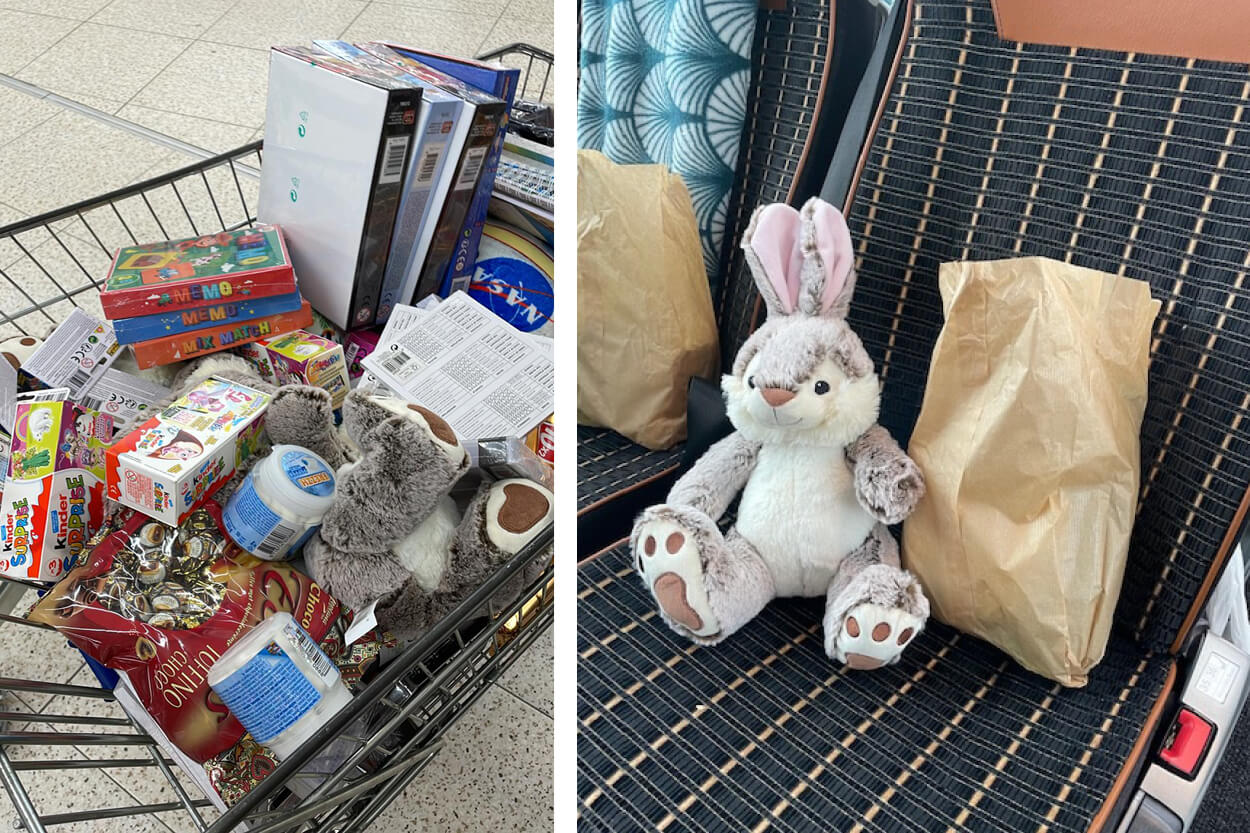
When the issue was resolved, I saw them for the first time. I will never be able to erase their faces from my memory. They looked resigned. Almost without any evident or describable emotion. They looked like zombies. Before leaving from the Netherlands, we had thought to make the bus look nice and we added some toys for the children, for instance. But when they boarded it, they sat down and went back to sleep again.
The strangest thing on the way back was that there were many children, but none of them cried. None of them did “kids’ things.” None of them ran around. And nobody had any possessions, any suitcases with them. They only came with their traumas.
And then you left for the Netherlands, right?
Sort of. Communication was tricky, but thankfully there were a couple of women that had some basic understanding of English. We also had to check their names and passports while we were leaving the border. Unfortunately, we realized then that one of these mothers aboard forgot her papers in the other bus that took her from Kharkiv to Poland. We had to drive back and thankfully the document was still there as the bus had not left. Again, we should not judge these actions. This woman was leading a very healthy and regular life only a few weeks before, and she was now on a journey towards the unknown with a small child.
In Poland, we stopped because we picked up a 65-year-old Ukrainian cook. She had decided to come to the Netherlands with us to help out with orphan children in my country. When we reached the Dutch border, I saw her cry. Her son had died at the front, in Ukraine. The only thing I could do for her is to give her a hug, but I felt helpless.
What happened when you arrived in the Netherlands? How did you feel?
The Red Cross and the local authorities took over for us. Ukrainians receive a special status in my country, and I believe in most European countries.
These 60 people left an undeletable mark in my heart and in my mind. I tried to acknowledge their existence. Once and again, I realized how good my family and I have it. How fortunate we are in our rich world.
Would you do it again in the future?
I definitely would do it again. It was very good that I had to leave ins such a rush, without thinking about it too much. Maybe if I had more time to organize it, maybe I would lose my innocence in doing it and I would be more resilient. Although, I realize that it is impossible to save them all, I wish I could drive 100 times to bring back more people.
For more stories

Thank you so much Catharina. You are an inspiration to all of us .
Thank you, Barry!
Dank u wel, Catharina! You let us live through what happened to you and you did help without thinking and with a lot of bravery. War is always destryoing the lives of the “normal” people and we are all asked to restore what we can of these lifes (not all can be restored though). I am from a familiy with a fugitive background (though I never had to flee myself and grew up in peace) and I know a bit of the trauma it leaves behind. I can feel the sorrow of the people from Ukraine and dearly wish the war to end quickly.
Thank you, Torsten. Wars leave permanent scars not only on the countries, but also and most importantly on the people that experienced the horrors and the fear brought about by the conflict. I, like you, hope that this abomination stops soon.
It is a very wonderful thing you’ve all done. It is always a wonderful thing when we act selflessly on behalf of others and share with them our empathy and compassion. It renders our hearts to measure as best we can from afar their pain and loss. Thank you for your willingness to put others first.
Thank you, Matthew!
Thanks everyone to take the time to read this story, never expected so many reactions. Happy to share this with you! time is the only thing we can share with others
All these comments are a testament to your actions, dear Catharina, but I also hope that your experience will continue to remind people that the war in Ukraine is far from over. Thank you once and again for sharing your story with me – I can’t stress this enough: it was an honour to listen to your actions and then write about them!
Hi Catharina, this is a story which really comes straight to the heart and with so much impact! You are always there if people need help and what a help these people needed. Indescribable story.
Thank you, Peter!
You have a big heart Catharina. I am proud that you are my colleague. Keep up the good work!
I couldn’t agree more, John. It was an honour to listen to Catharina and share her story with all internal colleagues.
You have a big heart Catharina. I am proud that you are my colleague! Keep up the good work!
I couldn’t agree more, John. It was an honour to listen to Catharina and share her story with all internal colleagues.
Such a wonderful, brave and selfless thing to do. I wish I could have joined you in helping these poor people reach safety. Thanks so much for sharing.
Indeed: brave and selfless.
Well done and thank you for sharing this wonderful life experience with us. Keep up the great deed.
You’re very welcome, Samuel. Feel free to share this story further!
Catharina, thank you for sharing this and leading by example.
Thanks, Albert! I am very happy to hear that Catharina’s story touched so many hearts in Cook.
Catharina – thank you for the selfless blessing that you gave to these women and children. Such an inspiring story at a heartbreaking time in many lives.
Thank you, Rebecca.
Such a powerful story. I am so glad you shared your experience and how it forever changed you. It also gave a glimpse at the devastation and harsh reality of what they are living through.
Thank you, Rebekah.
Thank you for sharing this story with us, and thank you for making yourself available to help those that are in need!
You’re very welcome, Mark. Feel free to share this story further!
In my travels with Cook I have said you can always recognize a Cook person by their persona, no matter where on earth they happen to be. You are Cook and we are grateful for it.
Totally agree, Mike!
Wonderful story to share! Catharina and her colleagues for this humanitarian effort are so admirable. I hope all the displaced people around the world are lucky enough to have somebody like Catharina on their side.
Thanks, Heather!
What a powerful story. Thank you Catharina for sharing.
Thanks, John!
I literally teared up reading this. I have a hard time finding words to express my feelings related to this atrocity. My heart breaks for the people of Ukraine, but is warmed by the generous actions by yourself and many others. Thank you for sharing.
Hi Jason, thanks for your kind and honest words. The war in Ukraine is far from being over, 6 months into it. Lives and livelihoods continue to be lost and disrupted. Coming to terms with atrocities like the ones Catharina shared with us in this article is increasingly difficult. And that’s a good thing because we should never come to terms with such horrors.
Well done Catharina and what a humanitarian thing to do. The people who you have brought back to the Netherlands I cannot imagine what they have been through and how their life has changed. There is never any victory in war only hardship for those who live through it.
Thanks a mil, Steve. There is no victory in war, I totally agree. Under the clouds of war, we destroy communities and families and often disrupt the development of the social and economic fabric of nations.