Becoming more visible on the global healthcare stage
Erik Landaas helps Cook share knowledge with global decision-makers and thought leaders in the field of health economics
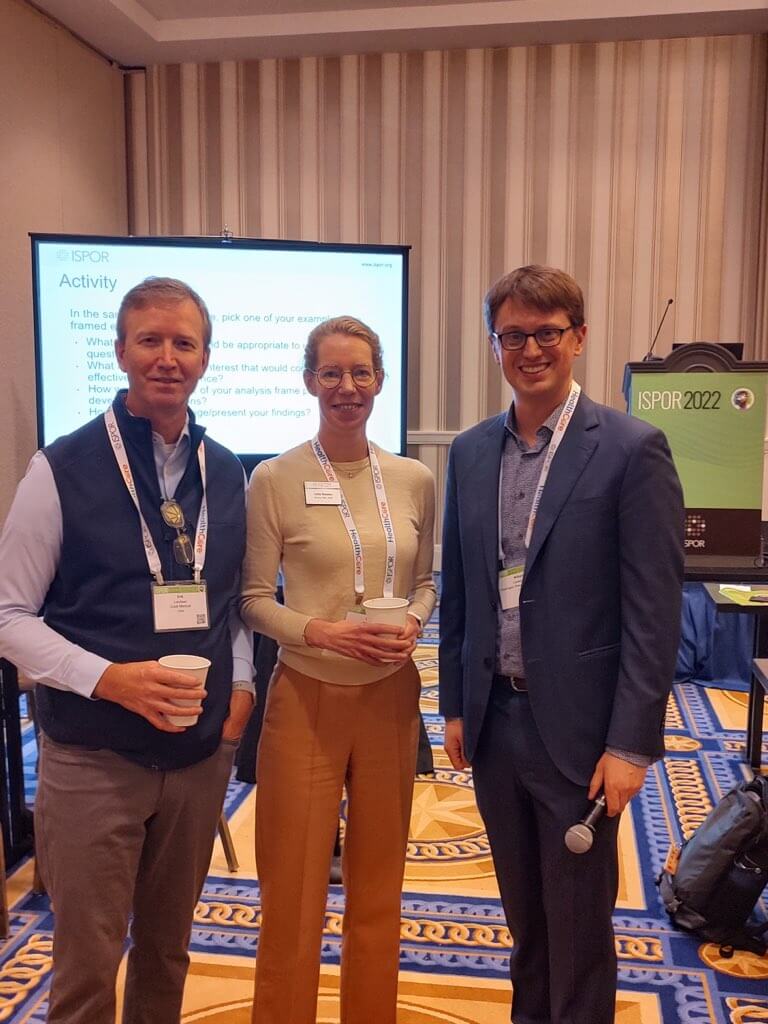
Hi Erik, thanks for taking the time to talk to us. Could you please tell our readers about you and your team?
I started at Cook in November 2021. I am based in Ponte Vedra, Florida, where I live with my wife, Marissa, and our daughters, Nina and Julia. I also have two older children who are out of the house, Ali and Aiden.
The Health Economics team is fairly new in Cook. Our primary focus is the US market for which we plan to generate health economic evidence and prospective strategies to support adoption of new and existing technologies. In collaboration with relevant functions and divisions, we are working to develop value propositions, value dossiers and communications around the value of our devices. In the future, we would like to conduct health economic models for large accounts and Integrated Delivery Networks (IDNs). We will also monitor, analyze, and communicate updates and developments in HTA (Health Technology Assessments) and value-based healthcare.
I am currently the only employee in this team, but we are recruiting two Health Economics specialists. Moreover, two students started their summer internship within our team in June, Urmi Patel and Alexandra Paffrath, and they will be with us for three months. It is very exciting for us to have them here. Bringing in students who do not see our company from the inside every day can open up an opportunity for fresh perspectives on our business, strategies, and plans.
Please briefly describe your background. What do you like about your profession? Why did you specialize in health economics?
I have been in healthcare for my whole professional life. I began my career in public health programming, epidemiological research, and disease surveillance, and have worked in HTA for ten years, five within the US health insurance space and five in hospitals. I also have consulted for pharmaceutical and device companies and hold a PhD in Health Economics and Outcome Research (HEOR).
In an ideal world, every patient could receive the best treatment, right away. However, in reality there are very limited resources, and health economics is needed to optimize the resources we have. I decided to specialize in this field because health economics can solve problems. It is an interesting puzzle. You have to work with so many pieces. It explores issues related to the production and consumption of healthcare and to any factors which might influence it, such as efficiency, competition, regulation, and peoples’ preferences. I am passionate about my work because through economic analyses, we can assist decision-making in defining the services needed by the patients. Health economics can also be used to determine what needs addressing to improve the health of a nation. Last but not least, through impact analyses, we can provide authorities with an estimate of the impact on the country’s healthcare budget of a new intervention. Health economics is complex, but it is all worth it in the end. The way we explain and support a technology will make a difference in a patient’s life and access to their needed solution.
Because of your long-standing experience in this field, you were one of the presenters at the 2022 ISPOR Conference in Washington DC. Our readers might not be familiar with ISPOR. What is it? And why was this a very important opportunity for Cook?
ISPOR stands for International Society for Pharmacoeconomics and Outcomes Research. It was founded in the later 1990s by a small group of thought leaders with the goal of advancing the science and practice of health economics and outcomes research (HEOR) around the world. Its membership has been growing over the decades. Its various regional and student chapters currently include around 14,000 individuals from more than 100 countries worldwide. ISPOR is a pivotal network for healthcare leaders: researchers, regulators, payers, policy makers, healthcare providers, patient organizations, academia, and life science industry can meet through ISPOR. Furthermore, ISPOR is the leading unbiased source for scientific, peer-reviewed good practices guidelines, and educational and training tools in the HEOR field.
For the reasons above, this was a very interesting opportunity for Cook for many reasons. It was an example of how we strive as a company to continually improve through different experiences. We shared our knowledge on a stage with global decision-makers and thought leaders in the field of health economics, so it was also a great chance to increase our visibility on the global healthcare stage.
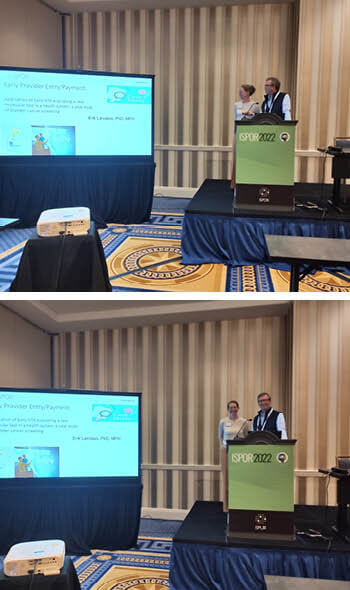
I’d like to start by saying that getting approved for a podium at ISPOR is very tough. The selection requirements are extremely rigorous. In this regard, I am glad I was fully supported by our internal global leader, Jens Johannesen, in the weeks of preparation before the conference.
My presentation took place on Sunday, May 18, 2022, and our lesson was about early-stage HTA. This process helps technology owners make evidence-informed decisions about further investment in the development of medical devices, especially with expected public reimbursement or procurement.
As the cost of bringing a new health technology to market continues to climb, more and more firms, developers, and investors are searching for tools to prioritize their efforts on the technologies with the greatest potential for clinical impact and market viability. While health economic analysis has long been established as a necessity to inform decision making for market access and reimbursement, it is increasingly being used at earlier stages of product development for healthcare and life sciences to increase the access rate of research and engineering, and efficiently prioritize data collection. The number of available methods for this field has continued to expand. Our course aimed to demystify the objectives of early-stage HTA and the methods of translational health economics.
Were you the only speaker on the podium? Who was there in the audience?
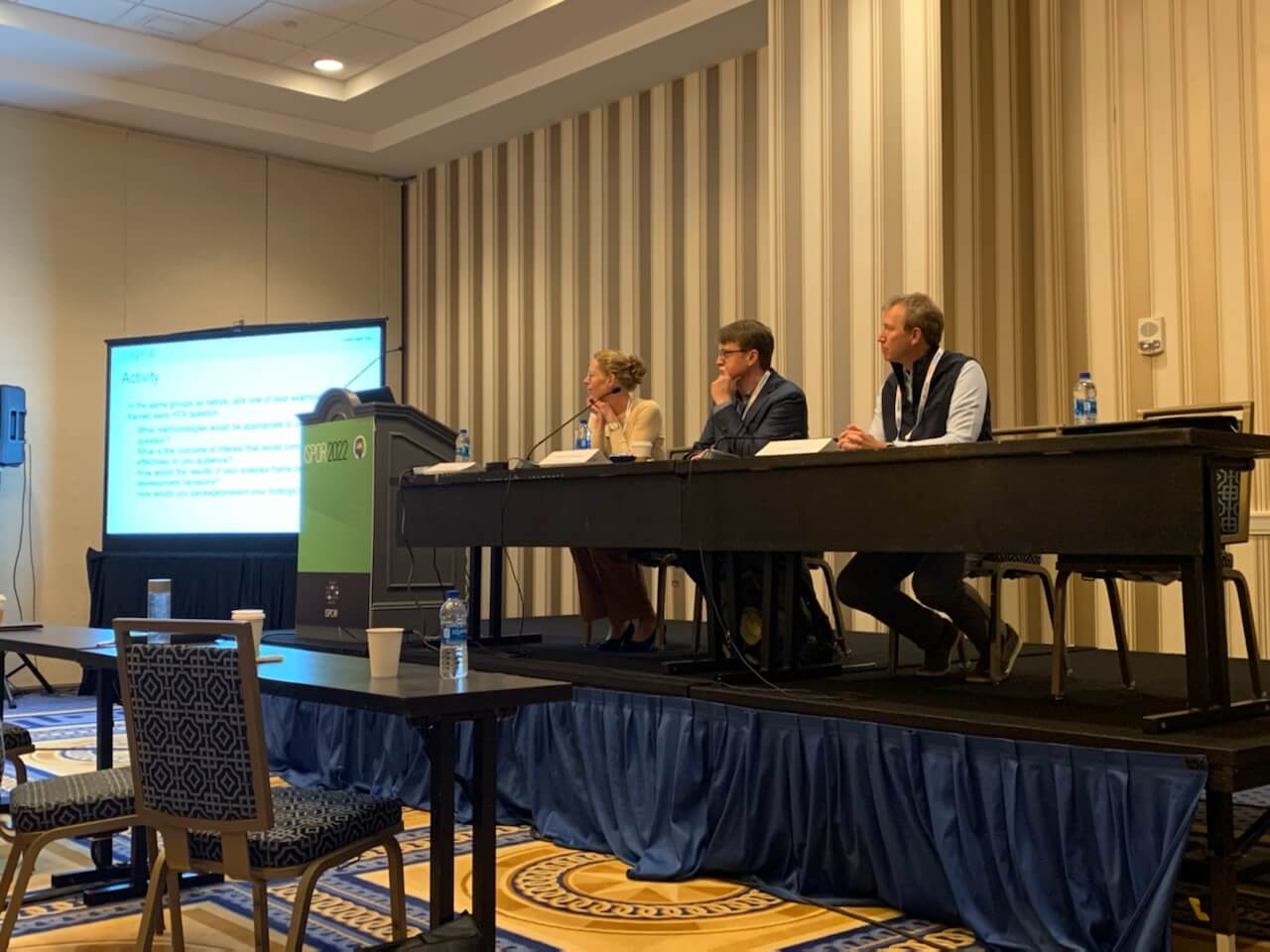
I was not alone on the podium. I had the great fortune to be there with two high-profile experts in this field, William Canestaro, PhD, MSc, from Washington Research Foundation, Seattle, Washington, and Lotte Steuten, PhD, MSc, from the Office of Health Economics, London, United Kingdom. I consider William and Lotte as my mentors. There was no ego involved in the preparation and during the conference. They are both ethical, warm, and humble. It has been a great pleasure to work with them and continue to learn from them over the years.
The in-person audience included around 50 participants. First of all, there were very eager students. They could gain a thorough understanding of available methods for early-stage technology assessment, the specific challenges and solutions, and a clear sense of how to implement this in the complexity of health technology development, funding, regulation, pricing, and reimbursement. The course also showed real-world examples and students had the opportunity to strategize about the creation of a research plan for their purposes.
There were also other stakeholders in the audience: global representatives from medtech and pharma industry, academics, policy makers, and consultants.
Over the last two years, we have all found different ways of working. For a long time, face-to-face meetings were impossible, and many of us looked to technology for help. Online meeting platforms such as WebEx, Zoom, and Microsoft teams have been great at keeping us connected in difficult times. How did you find it to go back to face-to-face professional interactions?
The last two years entailed mainly two-dimensional interactions, but on the day of my presentation at ISPOR, we were back to a face-to-face venue. It allowed me to properly read the room and understand body language and facial expressions better than online. I think conversation flowed naturally, particularly in such a varied group. Moreover, sharing ideas and “bouncing off” each other allowed me to build new connections with colleagues from other medtech companies and academic backgrounds as everybody was more engaged in the conversation.
Before we say goodbye, is there anything else you want to share with our readers?
I would like to thank Cook leadership for investing in our new Health Economics team and the staff for the warm welcome and commitment to supporting this work.
For more stories
Great achievement Erik!
Thanks a million, Dawn! I will make sure that Erik sees this good feedback!
Congratulations Erik! It is the beginning of a long series of presentations for you and Cook!
Merci, Fred 😉
Thank you for sharing. This is where policy meets product activity and by extension, how we get patients back to living.
Thank you, Bob. I will make sure that Erik sees this feedback!
Great achievement to bring your knowledge and Cook to the ISPOR landscape, Erik!
Thanks, Jasmin!