Continuous improvement bringing good returns to CSD
A large number of unauthorized product returns were piling up at Cook Medical’s AMER Delivery Center (DC) in Bloomington. An unauthorized return is a product returned from a customer or from a sales representative on behalf of the customer that has no paperwork to trace from who or where the return originated. There may only be a label on the packaging, a lot number, or the return may have additional product that has not been authorized. For the AMER DC and Customer Service staff at Cook, these unauthorized returns involve weeks of research to investigate. That was a problem.
What was causing this problem? Why was it taking so long to process an unauthorized return? Why were returns piling up and taking up space?
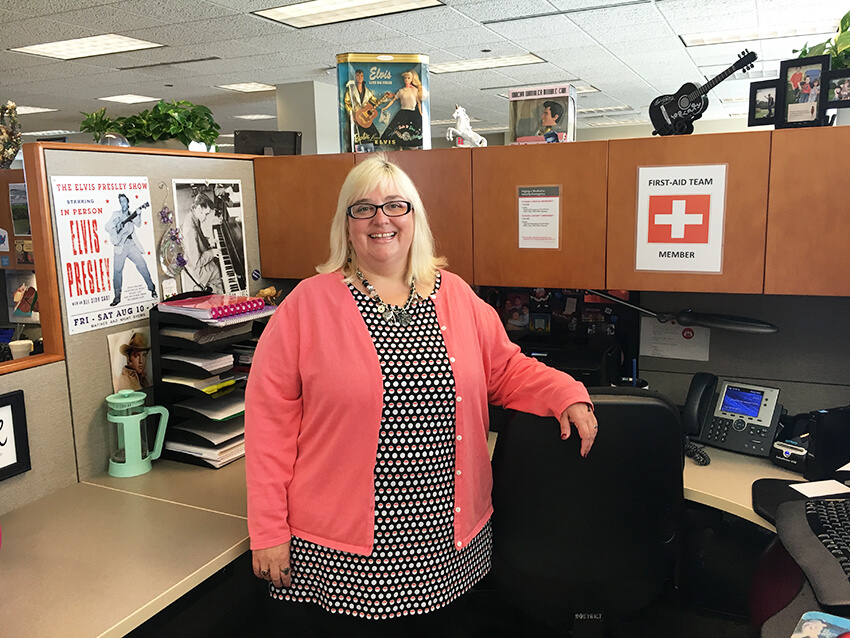
“We needed to address these questions quickly, because the sheer number of unauthorized returns in our warehouse was having such a negative impact. Handling returns had become too time consuming and costly,” said April Schooley, a Customer Support clerk in Customer Service at the AMER Support Center (SC) in Bloomington. “These returns were being stored on shelving that should have been used for new product going out the doors. It was becoming a space issue and a customer satisfaction issue.”
Problem analyzed, solution found
The solutions were finally found using an intense team-based, problem-solving, continuous-improvement technique known as a rapid improvement event (RIE). This RIE was held at the AMER SC on May 16–18 and was led by Paula Culliton, director of Global Continuous Improvement for Customer Support & Delivery (CSD). April attended, along with two colleagues from the AMER DC who had key roles in the returns process, Ward Robertson and Lisa Waters (both are Return Goods associates). Several managers from the AMER DC and AMER SC also attended the event.
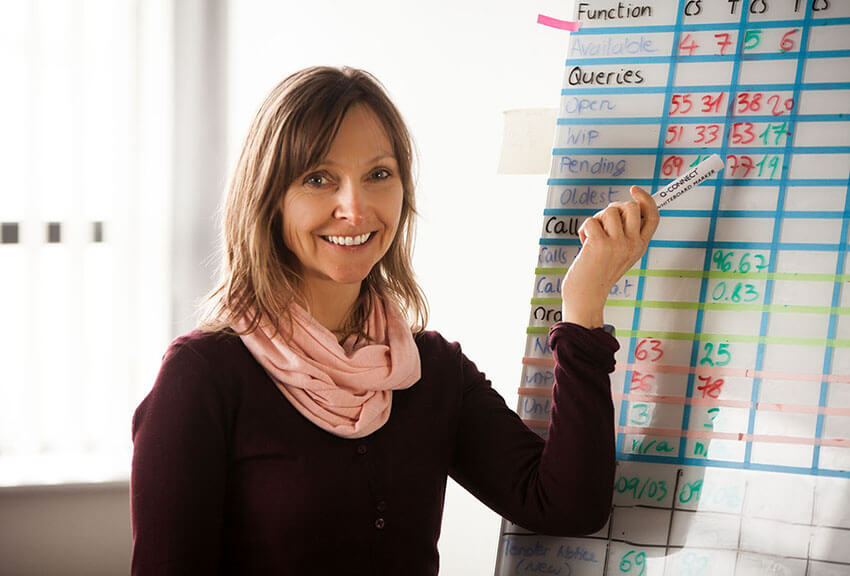
“Our goal,” April said, “was to shorten the unauthorized return process that would normally take two to four months down to two weeks or less.”
One of the biggest benefits of gathering all the players in the returns process together during the event was that each individual could share with others the details about their roles and their thoughts about improvements.
“Over the 18 years that I have been at Cook, I watched communication between my fellow employees slow to almost a stop between the two buildings AMER SC and AMER DC,” Ward said. “I noticed with the onset of email and automatic notifications, we don’t communicate face to face anymore. We lost touch with the fact that we are part of the same team and process.”
Simple discoveries
Direct communication during the RIE led to several time-saving ideas to make the return process more efficient.
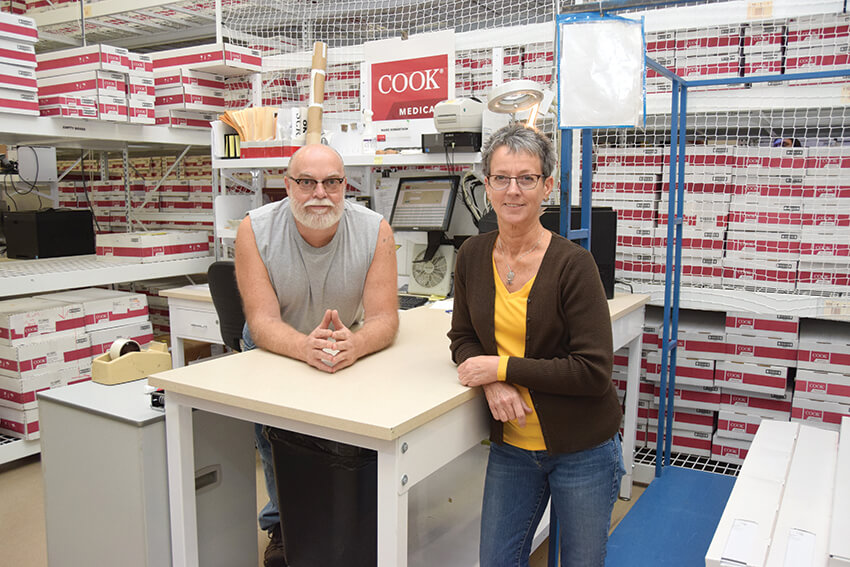
Ward was surprised to learn as he sat across from the AMER SC team during the meeting that they had access to a screen for tracing lot numbers that helped them determine if a return authorization already existed. “We thought they just had some super-secret method to track returns,” he said. As the discussion continued, Ward and his team realized the lot-tracing screen was called a “lot view,” and his team had access to it, too. “Before this discovery, we would spend extra time contacting SC to track the lot number. Our ability to access the lot view, has saved a tremendous amount of time in the investigation of unauthorized returns,” he added.
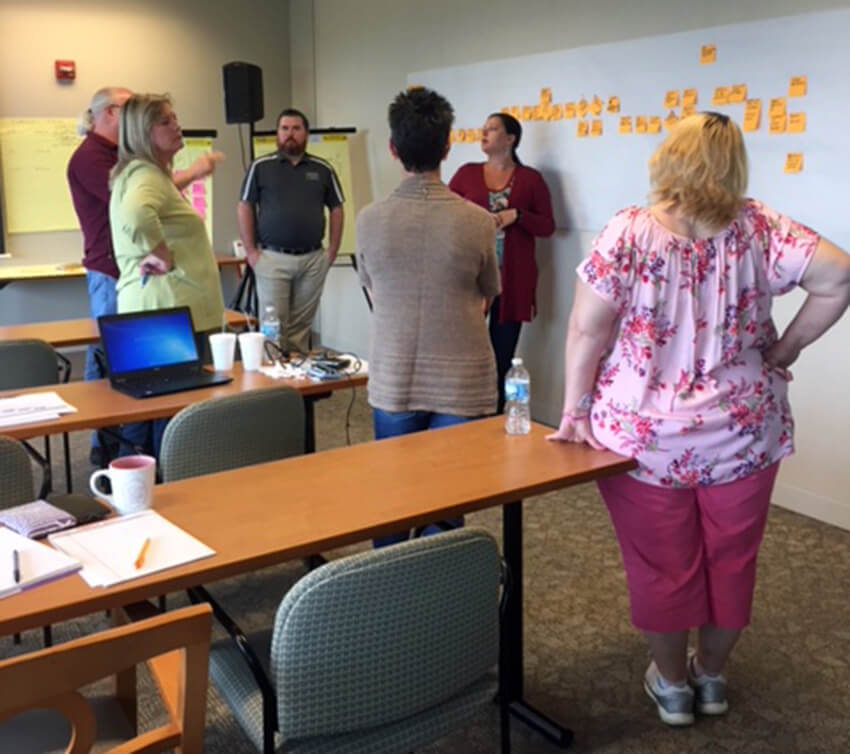
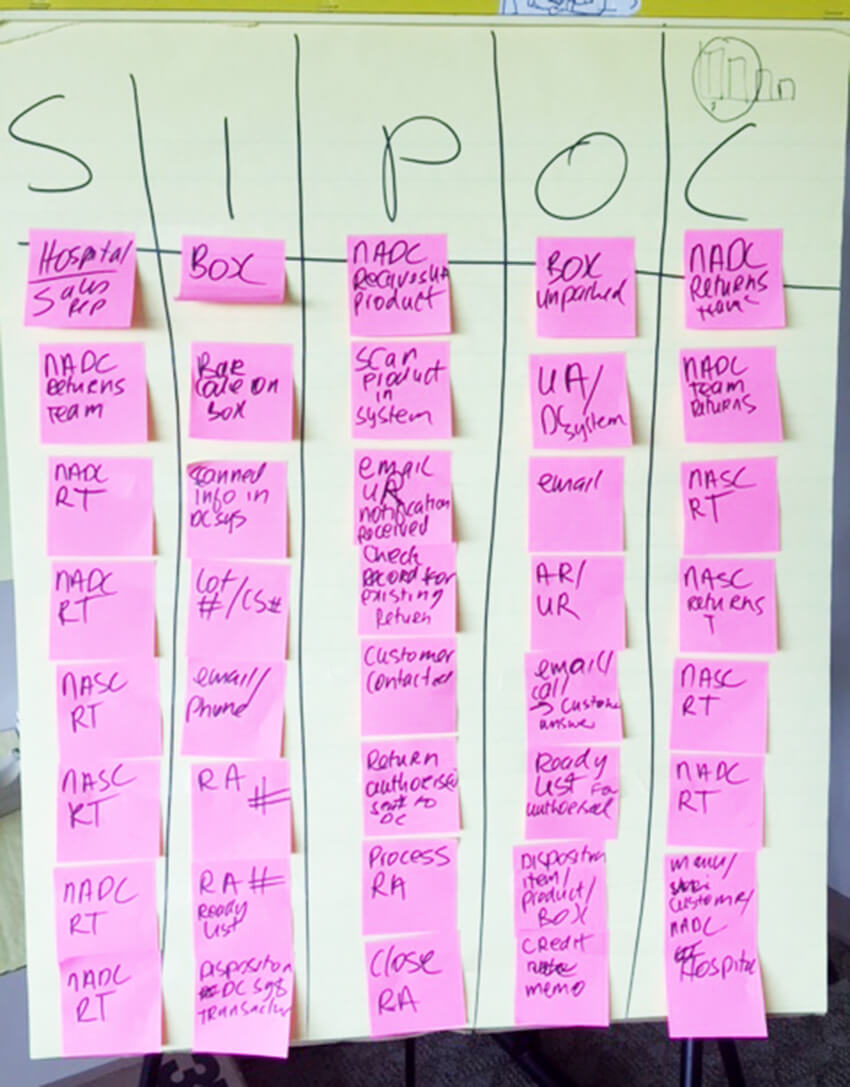
To facilitate discussion, Paula displayed a long piece of paper on the wall with a dual timeline, showing when AMER SC was notified of an unauthorized return and when AMER DC receives the unauthorized return. The team was able to visualize each step in the process and immediately saw places for improvement and overlap of duties.
The team then started to ask questions, such as, “Why does it take so long to contact a customer?”
“We discovered the most time-consuming difficulty was finding the right hospital personnel to contact to get our return questions answered,” Ward explained. “Many times the hospital staff was unresponsive, and as a result, the return would sit on a shelf while we waited for information. Our solution was simple. We have now put time limits on our return inquiries. If we receive no response after an allotted period of time, we send a letter to the customer denying the return and ship the product back. The letter refers the customer to Customer Support. These small steps are making a big difference.”
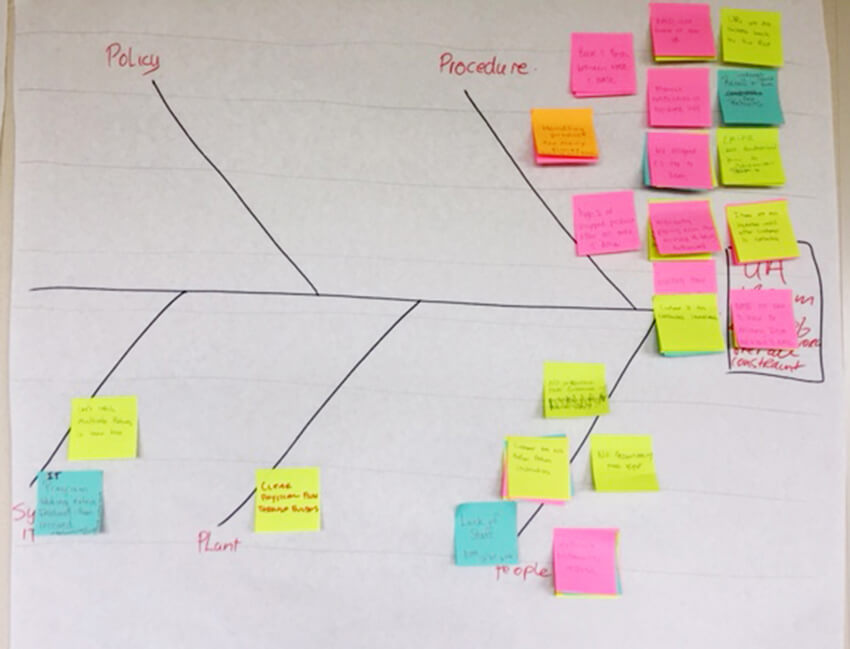
“During the entire event,” Lisa said, “we talked, we brainstormed, we used stickies and whiteboards to write our ideas down. We put the scenario out there, and we picked it apart.” But what Lisa found most beneficial was the relaxed environment that Paula created. “It helped us communicate better and gave us an opportunity to really meet our coworkers who had the same challenges as we did. I had never really met them before this meeting. We ended up having the same improvement goals, implementing more efficient procedures, and improving the return process overall.”
“Paula was an excellent moderator, tolerating no arguments between the teams or lack of participation,” Ward added. “It was solution-minded the entire time.”
Implementation
After the meeting, the teams had a challenging timeline to integrate the new ideas garnered from the meeting, gather and write new instructions, and confirm flow of new tasks. Face-to-face meetings and dedication from all team members have been core to quick implementation. The new unauthorized returns process could have taken years to develop, yet it took the team only several months of intense preparation. The new processes were implemented on August 29.
The teams have already seen improvements. Less returns are unauthorized, and the turnaround time for unauthorized returns has diminished considerably. Their goal was to have a manageable process, and with the new procedures in place, an unauthorized return takes the team less than two weeks to process.
Implementation of new processes means change, and “change is always rough,” says April. “I have been in returns for 13 years and with Cook a total of 17 years, Ward has been with Cook 18 years, and Lisa has been with Cook 26 years. We have proved you really can teach old dogs new tricks! We are so excited about the changes, and we are committed to making this returns system better.”
It happens after particularly inspiring meetings and workshops . . . that feeling of invincibility. “We can do anything!” Ward was so motivated about the possibilities for improvement and the plan of action that was crafted during the event that he had to take it in stride. “I don’t want to be too euphoric,” he says, “I want to be realistic, know what I can do, and be willing to learn new skills.”
As time away from the meeting expands, Ward, Lisa, April, and others who attended the RIE still have a momentum that has carried them well beyond the three-day meeting. “I have found through learning events like RIE that Cook is always ready and willing to teach,” Ward says.
Thanks for sharing this story. Very exciting, great work!
What a great example and reminder of how projects like this can be interesting, constructive, and fun! Continuous review and improvement is a great way to keep processes flowing at their best. Thanks for sharing!
Thanks for sharing your success story and what a positive impact continuous improvement has in your area.
The effectiveness of the tools used is made clear when looking at your fish-bone / cause and effect diagram. It looks like you ran out of space on the procedure side.
Well done to all involved!
My thanks to all! If anyone has a RIE event in their department I fully recommend getting involved, and giving the solutions generated the benefit of the doubt. It’s a great workplace recharge.
Thank You everyone for the kind responses to a Job well done by all who participated in the Rapid Improvement Session.
It’s so nice when every once in awhile to here that people still have great ideas and somebody takes a chance on them. GREAT JOB!!!!!
Thank you for sharing this experience! I believe that getting groups together face to face is key in finding solutions to complex issues and you have proved that. Congratulations!
Great job!! I appreciate knowing and understanding the challenges faced, helps to put things in better perspective. Thanks for sharing!
What an interesting story and a glimpse into an area I don’t really know a lot about. Thanks for educating us! And great work by all the teams involved in this effort!
Great work guys. Speeding up the returns process and having communication with the customer is key it improving their experience working with us.
I just finished reading your Life@Cook story. It is very inspiring. We have worked through changes and new implementations of processes in payroll in a similar way. I like that we can be vocal about our ideas and people listen. Returned Goods and the CMI Whse have made a lot of changes since I worked in finance/sale ops at Acuff.
And April I did not recognize you in the picture, your hair!
Best of Luck and keep up the great work,
Karen
Shared Service Payroll
I changed my hair right back. 😀 You will recognize me once again. 😀
Well done team!! Seeing the collaboration and how the team acknowledged each other and what they contribute to the overall process was simply amazing. CI is serious stuff for the company and our employees but we need to have a bit of fun along the way. Look out for the t-shirts that are coming…
I am looking forward to them. Thank you.
Awesome! Enjoy learning about all the Continuous Improvement projects that are taking place at Cook. Great job!
Improvement is always a good thing, thanks to all involved for making working @ Cook just that much better.
Awesome Job Team! I love working with you all on this.
Glad you were able to get together, make a plan, and put it into process. Good job! Go Team!!
Great article, great improvements, thank you very much for sharing. Congratulation to the teams and to Paula!
Kudos to the team involved! Great story of collaboration and continuous improvement.