Reconstructing a young boy’s face in rural Africa
Mr. Kelvin Mizen is a maxillofacial and microvascular-reconstruction surgeon in Grimsby, England.*
Eight years ago, he joined a group of physicians doing humanitarian work in Africa. The group, Facing Africa, specializes in helping children who suffer from noma, a gangrenous facial infection.
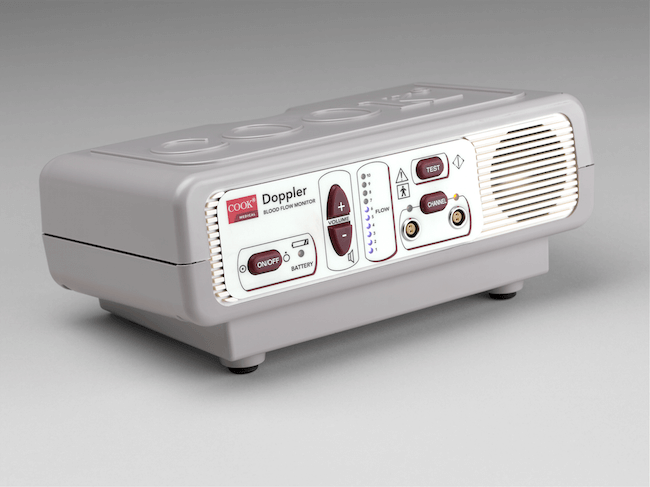
In the fall of 2015, Mr. Mizen took on a complicated case. That case happened to be the first to use the Doppler Blood Flow Monitor, a Cook Surgery product, in Africa. We asked him a few questions about the case.
Cook: Tell me a little about what happened.
Mr. Mizen: A young boy in Ethiopia was attacked by a hyena. His mother managed to get him out of the hyena’s jaws, but it came back and attacked again.
The boy lost his lower lip and chin. He couldn’t speak or eat, and his family was asked to pay thousands of birr (the currency in Ethiopia) in medical fees. We were asked to see him and do something for him, but it was a very challenging case.
Cook: What made it so challenging?
Mr. Mizen: I couldn’t just turn up in Ethiopia and do the operation without any planning. I had to plan the reconstruction on a computer. Plus, we had to help figure out a way to keep him stable until we could operate.
We set up our Internet in the capital of Ethiopia. Then, we could help manage his medical care until the operation. I was able to create a plan for his chin and lower lip.
Cook: How did the operation go?
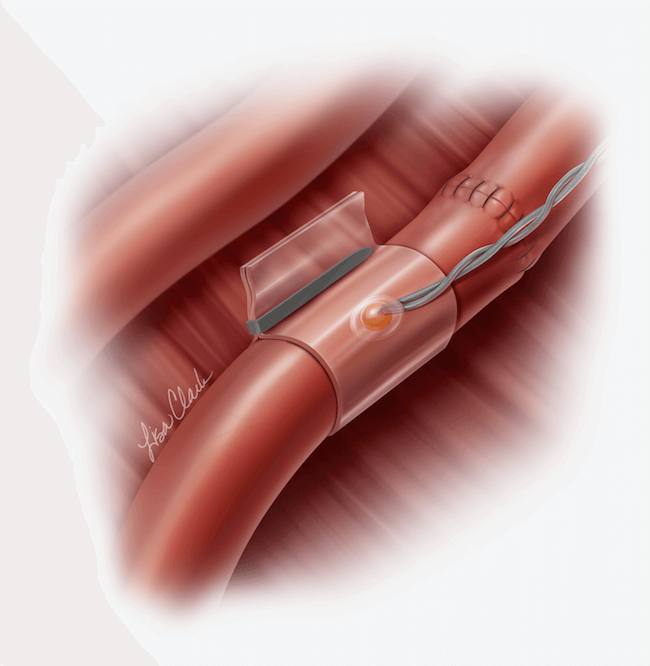
Mr. Mizen: We reconstructed his lip and chin and used the Doppler Blood Flow Monitor to monitor the flap. As far as I know, the Doppler had never been used in Africa.
We were quite pleased. The procedure went well, and the outcome was positive.
Cook: The boy is doing better?
Mr. Mizen: He’s beginning to speak and he’s moving his jaw and tongue. He’s trying to swallow. It’s been a good result.
Cook: Is there a future for more procedures like this in Africa?
Mr. Mizen: Normally, patients in these situations are flown to Europe to have the procedures done. But that’s expensive, and it puts more stress on the patient. We’re one of the first to do free-flap procedures in Ethiopia.
We’re against people who are trying to tell us to never do free-flaps in rural Africa. We’ve worked really hard for eight years to be able to do this level of work.
* British surgeons use the title of “Mr.” rather than the title “Dr.” used in many countries. They’re “Dr.” when they get out of medical school, but after they go through surgery training they graduate to “Mr.” Learn more about Titles in the Commonwealth.
This story reflects the experience of one individual. Every case is unique. We at Cook can’t guarantee that every patient will experience the same level of success. Information included in this article should not be used as the basis for any treatment recommendation.
Mr. Kelvin Mizen is not a paid consultant of Cook Medical.
Great story, thanks for sharing !!!
A life changed forever! It is great to see how people, products & procedures can make lives a whole lot better.
Great story! Thank you for sharing.
Great story!
This is a fantastic story and an excellent outcome for all involved, most importantly the little boy.
Great blog Lauren!!
A great Cook Story and wonderful outcome for our patient! Proud to contribute.
Feeling to be part of a great story….nice after a hard day to read this.
3 cheers for free-flaps!
Awesome story!!